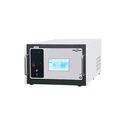
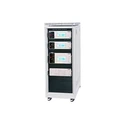
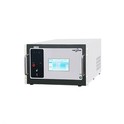
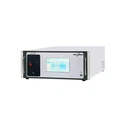
EMC testing refers to the testing of interference that has potential effects on the performance of equipment and systems in addition to the classic EMC testing.
The generation of interference here is not as measured in the classic test, it is relatively intuitive and easy for people to observe and understand. The interference faced here is more caused by the internal non-linearity of the equipment, process problems and other reasons during the operation of the equipment. caused.
Its specific content includes frequency characteristic test, shielding effectiveness test, EMI filter safety test, antenna isolation test, receiver intermodulation conduction sensitivity test, intermodulation conduction sensitivity test, third-order and passive intermodulation product test , Space micro-discharge phenomenon test, etc.

1. Frequency characteristic test
Frequency characteristic testing refers to the frequency spectrum characteristics of the radio transmission signal, including the frequency and stability of the transmission signal, the transmission signal bandwidth, power, and various responses of the signal receiving path.
It is different from the interference emission test, because the latter focuses on emission other than the operating frequency.
1) Test of transmitter. The frequency characteristic test can be carried out by means of radiation field, or by means of conduction in a closed loop. The former connects the transmitter and the test receiver directly, and uses a spectrum analyzer to measure the data; the latter is generally carried out in a dark room and uses an antenna combination spectrum analyzer to test at a certain distance.
2) Test of receiver sensitivity
The receiver under test is placed in the modulation mode of the working state, and it is tuned to the standard test frequency. By changing the modulation frequency (for FM, AM receiver, etc.), radio frequency (for single-sideband receivers) or local oscillator frequency (exceeds) Heterodyne receiver), maximize the receiver carrier output (signal + noise) (the receiver works in the best state), then change the input level to make it produce a standard response, and record the minimum level at this time. For the modulation system, an unmodulated signal should also be introduced, and the input level and frequency of this signal should be changed to produce a squelch of 20dB at the audio output end of the receiver, and record the minimum input level at this time. For pulse modulation receivers, you need to pay attention to the maximum and minimum sensitivity limits under specific conditions such as a given pulse width and pulse repetition frequency.
2. Shielding effectiveness test
1) Cable test
Cable testing measures the amount of radio frequency leakage. Pay attention to the problem of matching impedance before testing, and the cable should be matched with the test instrument to avoid unreliable testing caused by mismatch.
2) Chassis shielding test
The chassis will have electromagnetic leakage and reduce the shielding effectiveness due to the installation gaps, heat dissipation holes, openings for installation adjustment shafts, meter heads, etc., and cable outlet holes. But through reasonable design, the efficiency can be reduced to an acceptable level. The shielding effectiveness test is the basis for testing whether the design is reasonable and feasible.
3. Antenna coupling test
The test is used to measure the degree of interaction between antennas. Due to the non-idealization of antenna radiation and the generation of cross-polarization, undesirable power coupling between antennas may occur.
4. EMI filter test
Due to the special function of EMI filter, it is required to pay attention to the following points when measuring: safety parameter test, such as leakage current, test voltage, insulation resistance, discharge resistance, etc.; current load for insertion loss test; insertion loss and filter The termination impedance and load are related, and should be set according to the standard when testing.
5. Intermodulation performance test
Intermodulation refers to when two or more frequency input signals enter the front end of the receiving system at the same time, due to the nonlinearity of the system (the nonlinearity here is not necessarily limited to nonlinear devices such as detectors, some devices have strong input power It will also work in the non-linear region), mixing in any stage of the RF amplifier or mixer, so that the output signal has new frequency components in addition to the original frequency spectrum.
Intermodulation testing is mainly to test the intermodulation sensitivity of the instrument, that is, the immunity of communication receivers, radio frequency amplifiers, radio transceivers, radar receivers, sonar receivers, and electronic countermeasure equipment receivers to intermodulation products.
In the field of EMC intermodulation interference testing, first calculate the difference frequency of interference signals and harmonics that may be generated in the receiver. The next thing to be determined is the standard reference output level, which refers to the output value when the device under test is working normally. Generally expressed by (signal/noise)/noise. When the equipment is working in an abnormal state, the standard reference output is given by the corresponding specification. Determine the limit of intermodulation products during measurement, expressed in decibels higher than the standard reference output level. When the input level is higher than a certain value of the standard reference level, the receiver enters the nonlinear region, and this value is determined as the nonlinear operating point of the receiver.
6. Intermodulation conduction sensitivity test
Intermodulation means that a sufficiently strong unwanted signal enters the receiver. Due to the existence of non-linear devices, the useful signal of the receiver will be interfered, resulting in parasitic modulation. The condition for the existence of such interference is that the interference signal has a certain strength, that is, as long as the interference signal has a certain strength, there is interference.
7. Passive intermodulation product test
Passive intermodulation refers to the intermodulation products caused by the inherent nonlinearity of passive devices. The general PIM phenomenon is caused by current flowing through non-linear components. Its generation mechanism is complex, and is related to material properties, structure, channel loading, and system assembly process.
8. Space micro-discharge phenomenon test
Micro-discharge phenomenon refers to the secondary electron multiplication phenomenon generated between metal surfaces under the acceleration of a strong microwave electric field under vacuum conditions, that is, a radio frequency breakdown phenomenon that occurs in passive components that transmit high-power microwaves. . This phenomenon is mainly caused by improper design, processing technology, surface treatment, materials, pollution and other factors. It occurs when the power, frequency and gap size of the internal structure of the component meet a certain relationship.