1. What is surge?
Surge is a transient wave of electrical current, voltage or power propagating along a line or a circuit and characterized by a rapid increase followed by a slower decrease.
2. What causes surge?
1) Power system switching transients
Power system switching transients can be separated into transients associated with:
① major power system switching disturbances, such as capacitor bank switching;
② minor local switching activity or load changes in the power distribution system;
③ resonating circuits associated with switching devices, e.g. thyristors, transistors;
④ various system faults, such as short-circuits and arcing faults to the grounding system of the installation.
2) Lightning transients
① direct lightning stroke to an external (outdoor) circuit injecting high currents that produce voltages by either flowing through ground resistance or flowing through the impedance of the external circuit;
② indirect lightning stroke (i.e. a stroke between or within clouds or to nearby objects which produces electromagnetic fields) that induces voltages/currents on the conductors outside and/or inside a building;
③ lightning ground current flow resulting from nearby direct-to-earth discharges coupling into the common ground paths of the grounding system of the installation.
3.What is the purpose of lightning surge testing?
Lightning surge testing is an important electrical safety testing method, whose main purpose is to verify whether electric devices or electrical equipment can withstand electrical changes caused by sudden voltage interference such as lightning strikes and surges, to ensure the safe operation and stable performance.
IEC 6100-4-5, GB/T 17626.5 relate to the immunity requirements, test methods, and range of recommended test levels for equipment regarding unidirectional surges caused by over voltages from switching and lightning transients. The object of this standard is to establish a common reference for evaluating the immunity of electrical and electronic equipment when subjected to surges.
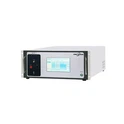
4. Combination wave generator
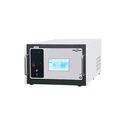
1) 1,2/50 µs combination wave generator
open-circuit voltage front time of 1,2 µs
open-circuit voltage duration of 50 µs
short-circuit current front time of 8 µs
short-circuit current duration of 20 µs


Circuit diagram


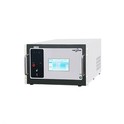
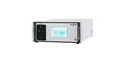
2) 10/700 µs combination wave generator
open-circuit voltage front time of 10 µs;
open-circuit voltage duration of 700 µs;
short-circuit current front time of 5 µs;
short-circuit current duration of 320 µs


Circuit diagram

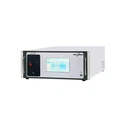
3) Coupling/decoupling networks for surges to unshielded, symmetrical interconnection lines
Surge signal lines CDN is designed for communication/telecom products and other signal lines, can be tested in single, double, four and eight signal lines.
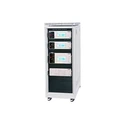
EMCSOSIN have been committed to the EMC testing field, specializing in providing EMC testing instruments, product rectification and training service. Our self-developed EMC equipment including: ESD simulator, EFT/burst generator, surge generator, voltage dips generator, power frequency magnetic field generator, damped oscillatory wave generator, automotive pulse simulator etc. EMCSOSIN also provide customers with professional EMC system integration solutions.
Please do not hesitate to contact us for more details. Thank you!