1. Basic concepts
1) What is EMS?
EMS standards for Electromagnetic Susceptibility, which refers to the ability of a device to maintain normal operation when faced of various electromagnetic interference environments, in short, the anti-interference ability of the equipment. Nowadays, electrification and information are highly integrated, various electronic devices are numerous and densely used. These devices will inevitably be affected by the surrounding complex electromagnetic environment. Therefore, the quality of EMS performance directly affects whether the equipment can work stably.
2) What is the relation with EMC?
EMS is one of the two core parts of EMC (Electromagnetic Compatibility). The other part is EMI (Electromagnetic Interference). EMS solves the problem of "anti-interference" of the equipment to ensure that the equipment can operate normally in a complex electromagnetic environment; EMI focuses on the equipment "does not interfere with others", controlling the electromagnetic interference emitted by the equipment itself to the outside world, so as not to negatively affect the normal operation of other equipment. Only by meeting the requirements of both EMS and EMI at the same time can we achieve electromagnetic compatibility between devices and ensure the harmony and stability of the entire electromagnetic environment.
2. Test standard
1) International standard
IEC 61000-4 series standards are the core of EMS testing, which provides detailed test specifications for different types of electromagnetic interference:
IEC 61000 - 4 – 2: ESD test, used to simulate the impact of electrostatic discharge from a person or object on the device in daily life.
IEC 61000 - 4 – 3: radiated, radio-frequency (RS) test, using an antenna to radiate a high-frequency electromagnetic field of 80MHz to 6GHz to the device to verify its ability to resist radio frequency interference.
IEC 61000 - 4 – 4: electrical fast transient/burst test, to simulate the transient interference generated by electrical switches and couple it to the equipment through power or signal lines.
IEC 61000 - 4 – 5: surge test, to test the ability of the equipment to withstand surges caused by lightning or large current switching.
IEC 61000 - 4 – 6: conducted immunity (CS) test, using current clamps or coupling networks to inject interference signals between 150kHz and 80MHz into the power or signal lines of the equipment.
IEC 61000 - 4 – 11: Voltage dip and interruption tests, to simulate voltage fluctuations in the power grid, including voltage dips, short-term interruption, etc., to test the stability of the equipment under these abnormal conditions.
IEC 61000 -4- 8: Power frequency magnetic field immunity test, this test simulates the effect of frequency magnetic fields generated by power systems and other electrical devices on equipment. Tipically, a magnetic field with a frequency of 50Hz or 60Hz is applied around the equipment, and the magnetic field strength depends on the use environment and standard requirements of the equipment.
IEC 61000- 4- 9: Impulse magnetic field immunity test, which mainly simulates the interference of impulse magnetic field to equipment generated by lightning strike and switching operation. A specific impulse magnetic field generator is used to generate a impulse magnetic field with certain waveforms and amplitudes.
IEC 61000- 4- 12: Ring wave immunity test. Ring wave is caused by power supply and control line switching or lightning strike and appears on the terminal of devices. The ring wave may affect the reliable operation of equipment and system. A ring wave generator is used to evaluate the performance of electrical and electronic equipment, devices or systems subjected to ring wave.
IEC 61000- 4- 18: Damped oscillatory wave immunity test, used to simulate the effect of damped oscillating field generated by switching operations in a grounded circuit on equipment in the power system. The test equipment generates a damped oscillating magnetic field with a frequency tipically ranging from 100kHz to 1MHz.
2) Industry specific standards
Different industries have developed their own EMS testing standards due to varying usage scenarios and requirements.
Automotive electronics: Adopting the ISO 11452 series standards, the electronic devices inside the car not only have to withstand internal electromagnetic interference such as engine ignition and onboard radio during driving, but also have to resist complex electromagnetic environments from the outside. Therefore, this standard puts forward strict requirements for the anti-interference performance of automotive electronic devices.
Medical equipment: Following the IEC 60601-1-2 standard. Medical equipment is directly related to the patient's life and health. Any equipment failure caused by electromagnetic interference may lead to serious consequences, so the EMS testing standards for medical equipment are also extremely strict.
3. Actual Application Case
Medical Equipment: MRI devices, as important diagnostic tools in healthcare, rely on strong magnetic fields and radio frequency signals.
If an MRI device fails to pass high-level EMS testing, external electromagnetic interference may degrade image quality, leading to misdiagnosis and posing a serious threat to patient health and safety.
Automotive Electronics: Vehicle radar is one of the key sensors in autonomous driving systems. Insufficient immunity can result in incorrect radar signal interpretation, causing the autopilot system to make wrong decisions and potentially leading to traffic accidents, so the vehicle radar must have good anti-interference performance.
Industrial Controllers: Industrial controllers are commonly used in industrial production environments with strong electromagnetic fields, such as steel mills and substations.
In these locations, equipment faces significant EFT and surge interference. If industrial controllers cannot withstand these disturbances, they may cause production line shutdowns, resulting in substantial economic losses for companies.
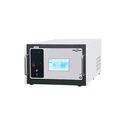
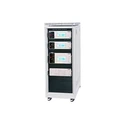
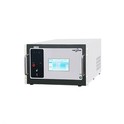
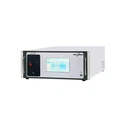
EMCSOSIN have been committed to the EMC testing field, specializing in providing EMC testing instruments, product rectification and training service. Our self-developed EMC equipment including: ESD simulator, EFT/burst generator, surge generator, voltage dips generator, power frequency magnetic field generator, damped oscillatory wave generator, automotive pulse simulator etc. EMCSOSIN also provide customers with professional EMC system integration solutions. Please do not hesitate to contact us for more details. Thank you!