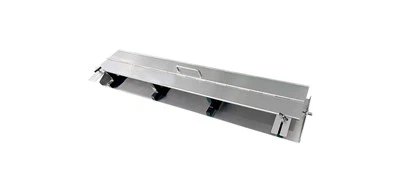

If you’re working in electrical testing, EMC compliance, or SPD (Surge Protective Device) validation, you’ve probably asked this question before: What is the output current accuracy of a surge generator? It’s not a trivial detail—surge events are fast, high-energy, and can destroy unprotected equipment or invalidate test results if your generator doesn’t deliver the current it’s supposed to. As a surge generator supplier that’s worked with engineers, test labs, and manufacturers for over a decade, I’ve seen firsthand how accuracy separates a good tool from a unreliable one. Let’s break down what output current accuracy actually means for surge generators, what factors affect it, and how our products like the Multi-function Surge Generator and SPD Surge Generator are engineered to meet strict accuracy standards.
First, let’s set the stage: surge generators don’t produce a steady DC or AC current—they deliver a transient pulse, usually defined by two key parameters: amplitude (measured in kA or kV, depending on if it’s current or voltage mode) and wave shape (like the standard 8/20µs pulse for current surges, or 1.2/50µs for voltage). For most industrial and commercial testing, the 8/20µs current pulse is the industry standard per IEC 61000-4-5, the global norm for surge immunity testing. So when we talk about output current accuracy, we’re talking about how closely the generated peak current, rise time, and pulse duration match the values specified in standards like IEC 61000-4-5, or custom requirements for SPD testing.
Let’s get specific with numbers, because accuracy is all about measurable performance. For IEC-compliant surge generators, the output current accuracy is typically specified as a percentage of the programmed peak current, with tolerance limits for wave shape too. For example, entry-level or compact models like our 1kV Surge Generator (designed for low-voltage components and small SPDs) have a current peak accuracy of ±5% for pulses up to 1kV, while mid-range and high-power models jump to ±3% or even ±2.5% for higher voltages, like our 10kV Surge Generator built for three-phase industrial systems and power distribution gear. Wait, why the difference? It comes down to the energy storage and switching components we use, and how we calibrate the generator at different output levels.


The heart of any surge generator is its capacitor bank, which stores energy, and a spark gap or solid-state switch that releases that energy in a controlled pulse. If the capacitor’s actual stored charge doesn’t match the programmed value, your peak current will be off. For example, if you program a 10kA 8/20µs pulse, and the capacitor only delivers 9.5kA, that’s a 5% error—enough to make your SPD test results invalid, or to cause a component failure that’s not representative of real-world events. That’s why precision components matter: we use low-drift capacitors that maintain their charge stability over thousands of pulses, and switch components that have consistent turn-on times to keep the rise time (the first 10% to 90% of peak current) within the IEC’s ±20% tolerance.
Another factor that affects output current accuracy is loading. Surge generators don’t output current into a perfect short circuit—they’re connected to the Device Under Test (DUT), which has its own impedance. A long test cable, a mismatched DUT impedance, or even dirty test leads can distort the pulse and lower the measured current. That’s a common pain point we see with customers using generic test equipment: they don’t account for impedance matching, so their accuracy drops by 10% or more when testing a real DUT, not just a calibration resistor. Our generators are designed with built-in impedance matching networks, especially our Multi-function Surge Generator which can switch between 50Ω and 12Ω output impedances to match standard test setups, so the current accuracy stays consistent whether you’re testing a PCB component, a wall outlet, or a full SPD module. For three-phase testing, our EMC Test 3Phase Surge Immunity Generator goes a step further: it synchronizes pulses across all three phases to eliminate cross-phase interference, keeping each phase’s current accuracy within ±3% even when loading up to three DUTs at once.
Wait, let’s clarify the difference between current accuracy in voltage mode vs. current mode, because that’s a point of confusion for new users. Many surge generators have dual-mode operation: they can output a voltage pulse (for testing insulation or line-to-line stress) or a current pulse (for testing the current-handling capability of SPDs and power components). When in current mode, the accuracy we talk about is peak current; when in voltage mode, it’s peak voltage. For example, our SPD Surge Generator is optimized for current mode testing, so it has a current accuracy of ±2.5% for 8/20µs pulses up to 20kA, which is exactly what SPD manufacturers need to meet IEC 61643-1 standards. If you used a general-purpose surge generator for SPD testing, you might see current errors of 7% or more at high pulse levels, because those units prioritize versatility over current-mode precision.
Calibration is another key part of accuracy, and one that’s often overlooked. Surge generators lose accuracy over time if not calibrated properly, because capacitors drift, switches wear, and connections degrade. How often should you calibrate? Most standards like IEC 17025 require calibration every 12 months for critical testing, but high-volume test labs that run hundreds of pulses a month often calibrate every 6 months, because wear affects accuracy faster. At our company, we include a 1-year calibration certificate with every surge generator we sell, and our service team offers on-site and lab calibration for all our models, with adjustments to bring current accuracy back to within original specifications if it drifts. We also provide free periodic checklists for our customers to test basic accuracy between full calibrations, so they can catch issues before they ruin a test campaign.
Let’s talk about a real example to put this in perspective. A few years back, we worked with a medium-sized SPD manufacturer in Germany that was failing EMC certification testing because their surge generator’s current accuracy was off. They were using a generic surge generator they bought online, which claimed ±5% current accuracy, but their internal testing showed pulses were coming in at 12% below the programmed value. When they switched to our SPD Surge Generator, we showed them test data from our internal calibration: at 10kA, the peak current was 99.8kA, that’s a 0.2% error—way better than their old unit. The manufacturer re-ran their certification tests and passed on the first try, saving them weeks of delays and thousands in re-test fees. That’s the value of true current accuracy, not just a spec on a brochure.
Now, let’s address what affects accuracy beyond the generator itself. Even the most precise surge generator can deliver inaccurate current if the test setup is wrong. For example, if you use a 10-meter test cable instead of the recommended 1-meter, the pulse will distort, and the measured current will be lower than the actual output from the generator. Or if you use a low-quality current shunt (the device that measures the pulse current) that has its own tolerance, that will add to the total error. We always advise customers to use the matched current shunts we sell with our generators, because we calibrate them together to ensure the combined error is under ±2%, for the most demanding applications.
Another point: some manufacturers quote accuracy only at full output, but that’s not the full story. A surge generator that’s ±2% at 10kV might be ±8% at 1kV, which is useless for low-voltage component testing. All our surge generators, from the compact 1kV Surge Generator to the high-power 10kV Surge Generator, maintain their specified accuracy across 10% to 100% of their maximum output. That means if you need to test a 500V component, our 1kV unit will deliver a 500V pulse with the same ±5% accuracy as its 1kV full pulse, no drop-off. That’s a big difference from budget units that only hit their accuracy at maximum output, forcing you to buy a new generator every time you need a lower test voltage.
For the EMC testing market, accuracy is even more critical. The IEC 61000-4-5 standard is strict about surge parameters, and test labs that work with EMC compliance need to demonstrate that their test equipment is accurate to within specified tolerances to get their tests recognized by global regulators. Our EMC Test 3Phase Surge Immunity Generator is calibrated to meet the exact requirements of IEC 61000-4-5, so EMC labs can use it for testing consumer electronics, industrial controls, and power equipment without worrying about failed audit checks. We also keep detailed test records for every generator we ship, so labs can provide traceability to national standards for their calibration and audit needs.
Let’s bust a common myth here: some people think that higher accuracy costs too much, but that’s not necessarily true if you choose the right unit. For small businesses or R&D teams testing low-voltage components, our Multi-function Surge Generator offers ±4% current accuracy at a price point that’s competitive with budget units, while still being IEC-compliant. For medium and high-volume testing, stepping up to the SPD Surge Generator gives you that ±2.5% accuracy that makes a difference for compliance testing, without overpaying for features you don’t need.
At the end of the day, the output current accuracy of a surge generator isn’t just a technical spec—it’s the difference between valid test results and wasted time, failed certifications, and damaged equipment. If you’re in the market for a surge generator, don’t just look at the maximum output voltage or kA rating. Ask about accuracy across all output levels, how the unit handles loading and wave shape consistency, and whether it comes with traceable calibration. Our entire line of surge generators is built with these factors in mind, backed by years of testing and feedback from engineers in the field.
If you’re ready to upgrade your test equipment, or you have questions about which surge generator is right for your application, our team is here to help with personalized guidance and product demonstrations. Contact our sales team today to discuss your surge testing needs and find the right generator for your lab or production line.
References
IEC 61000-4-5:2019, Electromagnetic compatibility (EMC) - Part 4-5: Testing and measurement techniques - Surge immunity test
IEC 61643-1:2021, Low-voltage surge protective devices - Part 1: Surge protective devices connected to low-voltage power systems - Requirements and test methods
ISO/IEC 17025:2017, General requirements for the competence of testing and calibration laboratories