


If you’re in the industrial EMC (Electromagnetic Compatibility) testing space, chances are you’ve encountered 3 Phase EFT generators as a go-to tool for simulating the fast, high-energy electrical transients that come with switching operations in three-phase power systems. But one question we get asked constantly by engineers, test technicians, and product designers is: “What’s the actual output voltage range of a 3 Phase EFT generator?” It’s not a one-size-fits-all answer, and if you get this wrong, you could end up with test results that don’t reflect real-world conditions—or worse, failing compliance tests for your products. Let’s break this down, especially from the perspective of someone who’s been supplying these generators for years, so you can understand exactly what you’re working with.
First, let’s start with the basics: EFT stands for Electrical Fast Transient, and three-phase systems are unique because they carry alternating current across three live conductors, plus a neutral and protective earth (PE) line. Unlike single-phase setups, which only have two main conductors to test, three-phase adds complexity because transients can occur across any combination of lines (line-to-line, line-to-neutral, line-to-PE). That’s why our 3 Phase EFT generators are built to handle multiple test configurations, and their output voltage range is tied directly to two key factors: the model’s rated power, and the specific test standard you’re adhering to (think IEC 61000-4-4, the global standard for EFT testing).
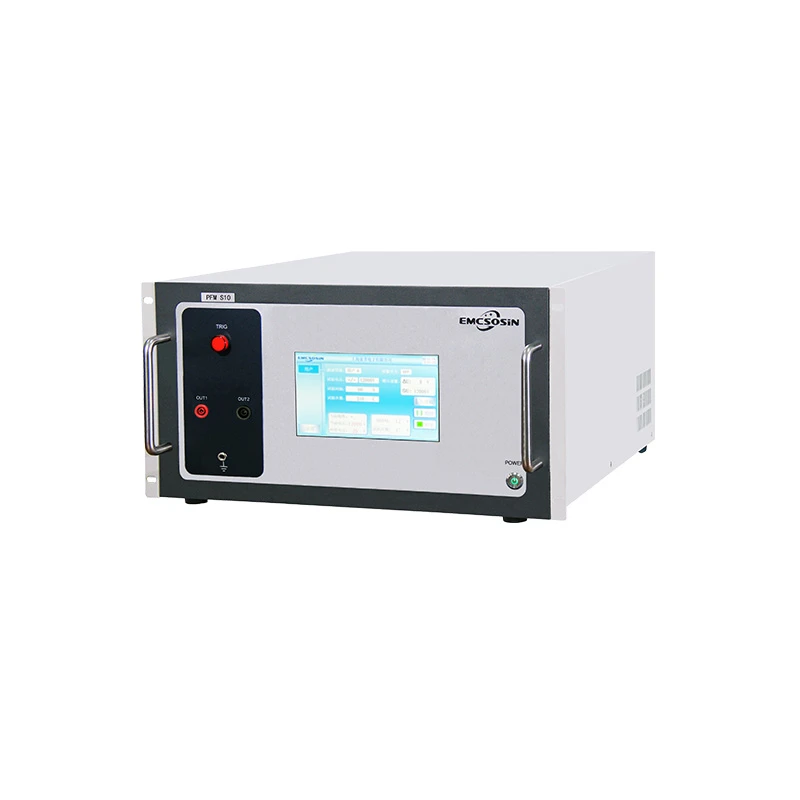
Let’s get into the numbers, because that’s what most people care about. For entry-level or mid-range 3 Phase EFT generators, the typical output voltage range is 0.5kV to 4kV. But wait—don’t stop there, because higher-end models push that range. Our Three Phase 5kV EFT/Burst Generator, for example, has an output range of 0.5kV up to 5kV across each of the three phases. This is perfect for testing industrial equipment like motor drives, PLCs, and power distribution units, which often operate in environments where transients can spike to higher voltages. But if you need even more juice, our Three Phase 6kV EFT/Burst Generator extends that range to 0.5kV all the way to 6kV—ideal for heavy-duty applications like utility-scale power converters or industrial automation systems that face harsher transient conditions.
Now, it’s not just the phase-to-neutral voltage you have to worry about. When testing three-phase systems, you can also run line-to-line EFT tests, where the voltage between two live conductors is what’s being measured. Most of our 3 Phase EFT generators are calibrated to deliver twice their rated phase-to-neutral voltage for line-to-line tests. So a 5kV phase-to-neutral generator will output up to 10kV for line-to-line transients, which aligns exactly with what IEC 61000-4-4 requires for three-phase product testing. That’s a critical detail—if your generator can’t handle both phase-to-neutral and line-to-line ranges, you’ll be stuck performing incomplete tests, and your product might fail compliance because you missed a key transient scenario.
A lot of people forget that the output voltage range also interacts with the coupling method you use. Capacitive coupling is the standard for EFT testing, where a clamp (not a direct connection) is attached to the conductor to inject the transient signal without disrupting the existing power flow. That’s why our Capacitive Coupling Clamp is designed to work seamlessly with our 3 Phase EFT generators—they’re calibrated to match the generator’s voltage range, so you don’t get unexpected voltage drops or signal distortion during testing. If you use a clamp that’s not rated for your generator’s max output, you could damage the clamp or get inaccurate results, so always make sure your coupling hardware is matched to your generator’s voltage specs.
Let’s compare that to single-phase generators to put this in context. A Single Phase 5kV EFT/Burst Generator has an output range of 0.5kV to 5kV, same as the three-phase 5kV model, but it only has one phase to test. A Single Phase 6kV EFT/Burst Generator tops out at 6kV, mirroring the three-phase 6kV model. The big difference with three-phase is that you’re testing three conductors at once, so you can run tests on each phase individually, or simulate a transient across multiple phases simultaneously—something that’s way closer to real-world three-phase power behavior than single-phase testing alone. If you’re testing products that use three-phase power, a single-phase generator won’t cut it for proper compliance testing.
Another thing to note: the output voltage range isn’t just a number on a spec sheet. It’s tied to the generator’s pulse characteristics too. For example, at the lower end (0.5kV), the EFT pulses are shorter and less energetic, simulating minor switching transients from low-power devices. At the upper end (say, 5kV or 6kV), the pulses are more powerful, matching the high-voltage transients from large inductive loads like motors or transformers switching on or off. If you try to push a generator beyond its rated max voltage, you’ll get distorted pulses, which will make your test results useless. That’s why we always recommend using a generator within its specified range, and double-checking your test standard’s requirements before you set up your equipment.
We’ve seen too many customers make the mistake of picking a 3 Phase EFT generator based solely on price, without checking the output voltage range for their specific application. A customer last year reached out because their entry-level 3 Phase EFT generator could only go up to 4kV, but they needed to test a new industrial drive that required 5kV per IEC 61000-4-4. They ended up having to re-run all their tests with a different generator, which cost them time and money. That’s why we always ask customers to share what they’re testing—whether it’s a small motor, a power inverter, or a distribution panel—so we can point them to the right generator with the correct voltage range.
Now, let’s talk about variables that can affect the actual output voltage you get from your generator. Ambient temperature plays a role: if your test lab is too hot, the generator’s internal components can heat up, leading to a slight drop in maximum output voltage. Humidity can also impact coupling clamp performance, which might reduce the effective voltage you inject. That’s why it’s important to perform regular calibrations on your generator and coupling clamps, following IEC guidelines, to make sure you’re consistently getting the voltage you’re setting. Our team offers calibration services for all our EFT equipment, so you don’t have to worry about drift over time.
So to wrap this up, here’s a quick breakdown of the key points: 3 Phase EFT generators typically have an output voltage range from 0.5kV to 5kV for standard models, and up to 6kV for heavy-duty versions, with line-to-line capability doubling that phase-to-neutral voltage. Always match your generator’s range to your product’s test requirements, use the right capacitive coupling hardware, and account for environmental factors that could affect performance.
If you’re not sure which 3 Phase EFT generator fits your needs, or you want to learn more about output voltage ranges, pulse characteristics, or coupling options, our team is here to help. Whether you’re testing a new prototype for compliance, troubleshooting EMC issues, or upgrading your lab equipment, we can walk you through the specs and help you pick the right tool. Reach out to our team to discuss your specific testing requirements and find the perfect EFT solution for your work.

References
- IEC 61000-4-4:2017, Electromagnetic compatibility (EMC) — Part 4-4: Testing and measurement techniques — Electrical fast transient (EFT) immunity test
- ABB EMC Test Equipment, EFT/Burst Generator Technical Datasheets, 2024
- Electronic Design, “Understanding Electrical Fast Transient (EFT) Testing for Industrial Systems,” October 2023
- EMC Compliance Journal, “Three-Phase EFT Testing: Key Considerations for Accurate Transient Simulation,” June 2024


