
If you’ve ever dabbled in robotics testing, you’ve probably run into that weird problem where a robot that works perfectly in your lab randomly glitches when it’s moved to a manufacturing floor or a busy warehouse. Lights flicker, other machinery hums, and suddenly your robot’s gripper misplaces a part, or its navigation system locks up for no obvious reason. That’s electrical fast transient/burst (EFT/Burst) interference for you – and if you’re testing robotics hardware, you need to simulate that kind of chaos to make sure your bot can handle it. The question I get all the time as a burst generator supplier is: “Can a burst generator even be used for robotics testing?” Short answer? Absolutely. But let’s break down why, how, and which tools make the cut.


First, let’s get on the same page about what a burst generator does, because a lot of folks mix it up with other EMC (electromagnetic compatibility) test gear. Burst generators produce high-voltage, short-duration electrical pulses that mimic the fast transients that pop up in real-world environments. Think about when a relay clicks on or off, or a motor kicks in – those events create tiny, rapid electrical disturbances that can sneak into a robot’s power lines, I/O ports, or communication cables and cause all sorts of weird behavior. Unlike big, slow voltage surges, these bursts are quick, sharp, and happen in clusters, so they’re designed to target the tiny, sensitive electronics inside robots that most people don’t even think about – like the microcontrollers that run navigation, the sensors that detect obstacles, or the Wi-Fi modules that let robots talk to their control systems.
Robots, especially industrial collaborative robots (cobots) and mobile autonomous robots (AMRs), are full of delicate parts that hate unplanned electrical noise. I’ve seen so many robotics teams skip this step because they think “our robot works fine in the lab, why test for this?” But then they end up with field failures that take weeks to troubleshoot, costing them thousands in downtime. Burst generators let you replicate those exact transient events in a controlled lab setting, so you can catch flaws in your robot’s design before it hits production. For example, if your robot’s motor driver locks up when a nearby conveyor belt kicks on, a burst generator can simulate that interference and let you test fixes like adding better shielding or upgrading your power supply’s filtering.
Now, when you’re testing robots, you’re not just dealing with single-phase power like you would in a small lab device. Most industrial robots are three-phase, right? They draw power from three separate lines to run their big motors and heavy machinery. That means you need a burst generator that can handle both single and three-phase setups, because the transients hit each line differently. Let’s talk about the options here. If you’re testing smaller robots – like tabletop cobots for light assembly – our Single Phase 5kV EFT/Burst Generator is a solid starting point. It puts out up to 5,000 volts of bursts, which is more than enough to simulate the transients from small relays, sensors, and low-power motors that these bots use. For slightly bigger single-phase robots, or if you need a little extra oomph, the Single Phase 6kV EFT/Burst Generator ramps that up to 6,000 volts, perfect for simulating harsher environments like busy manufacturing lines.
But when you move to full-size industrial robots, AMRs that run on three-phase power, or robots that connect to three-phase utility lines, you need gear that can test all three lines at once. A single-phase generator can only hit one line, so you’ll miss cross-line interference that happens when bursts jump between phases – and that’s a common cause of random glitches in big robots. For three-phase testing, we’ve got the Three Phase 5kV EFT/Burst Generator and the Three Phase 6kV EFT/Burst Generator, both designed to apply bursts to all three lines (plus the neutral line, too, if you need it) to mimic real-world conditions accurately. That’s non-negotiable for testing heavy industrial robotics, because their power draw is way higher, and the transients they produce are bigger and more likely to cross lines.
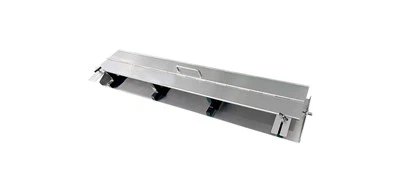
Wait, but how do you actually apply these bursts to a robot? You can’t just hook the generator straight to the robot’s power cord, right? That’s where the Capacitive Coupling Clamp comes in. This little device is a game-changer for robotics testing because it lets you inject bursts into cables without having to cut or splice them. Most robotics cables are already shielded, and if you splice them, you mess up that shielding – which is exactly what you’re testing in the first place. The coupling clamp clamps around the outside of a power cable, sensor cable, or communication cable, and uses capacitance to send the burst signal into the cable without making a physical connection. That means you can test the robot as a whole, just like it would operate in real life, not a stripped-down version. I’ve seen teams mess this up by trying to connect directly to internal ports and end up with test results that don’t match field conditions – don’t do that. The coupling clamp is how you get accurate, real-world test data.
Let’s talk about a common use case to make this concrete. Last year, we worked with a small robotics startup building a line of AMRs for grocery store warehouses. Their robots were having random navigation failures – they’d stop mid-mission, sometimes just for a second, sometimes for a full minute. They couldn’t figure out why, because all their sensors checked out, their battery was fine, and the map was correct. When they brought them to our lab, we used the Three Phase 5kV EFT/Burst Generator to simulate the transients from the warehouse’s overhead conveyors, which run on three-phase power. We hooked up the Capacitive Coupling Clamp to their navigation module’s power cable, started hitting it with burst clusters, and within 10 minutes, we replicated the exact failure they were seeing in the field. Turns out, their navigation microcontroller didn’t have enough filtering to handle the bursts from the conveyor, and even though it worked in the quiet lab, it couldn’t handle the warehouse’s electrical noise. They added a simple filter to the power input, re-tested with the burst generator, and the failure went away. They saved themselves from a huge recall and months of downtime – all because they used a burst generator for testing.
Another use case: testing cobots that work alongside human workers. These bots have to be super reliable, and they’re often in spaces with lots of other equipment – like welding machines, power tools, and conveyor belts – all creating electrical noise. A burst generator can simulate the bursts from that equipment and make sure the cobot’s safety systems don’t glitch. Imagine a cobot that picks up a metal part and moves it to a packaging station – if a burst from a nearby welder makes its motor driver misfire, it could drop the part, or worse, hit a human worker. Testing that with a burst generator catches those safety issues before deployment, which is critical for cobots that have to meet strict ISO safety standards.
Now, let’s get real about some misconceptions. Some robotics engineers I talk to say “we use ESD testers instead, right?” ESD (electrostatic discharge) is for static shocks, like when someone touches a robot and zaps it. But bursts are totally different – they’re fast, repeated pulses, not a single static zap. ESD doesn’t simulate the continuous, rapid interference from machinery that runs all day, every day. Burst generators are tailored exactly for that kind of environment. Others say “our test lab doesn’t have industrial power, so we can’t use these tools.” But no matter what kind of power you have, you can use a burst generator to inject bursts directly into the robot’s lines, regardless of the power source. You don’t need a three-phase industrial panel at your test bench – you just need a way to connect the coupling clamp to the robot’s cables, and the generator does the rest.
Wait, but what about small hobby robots or academic robots? Do they need burst testing too? Sure, if you want them to work reliably outside of a quiet classroom. I’ve talked to university robotics teams that built competition robots, only to have them glitch during a competition because of the nearby arena’s sound system or lighting. A burst generator sized for small, single-phase robots would let them test their bots against that kind of interference before the big event. It’s not just for industrial robotics – it’s for any robot that’s going to be used outside of a controlled, quiet space.
Now, let’s get into the nitty-gritty of how to set this up, because I know a lot of people get overwhelmed by EMC test gear. First, figure out what kind of power your robot uses: single-phase or three-phase. That will narrow down your generator pick – stick with the right model for your setup to get accurate results. Next, figure out which cables to test. For most robots, start with the power cable, the main sensor cables (like LIDAR or camera cables), and the communication cables (like Ethernet or Wi-Fi). For each cable, use the Capacitive Coupling Clamp – just clamp it around the cable, usually a foot or so away from the robot’s port, and make sure it’s grounded properly (follow the generator’s setup instructions, that part’s important for safety and accuracy). Then, set the burst parameters: most generators let you adjust the voltage, pulse duration, and repetition rate. Start low, like 1kV, and work your way up until you see glitches or failures – that will tell you how robust your robot’s design is.
One tip I always give teams: don’t just test at one burst level. Robots can handle low levels of interference, but if they’re in a harsh environment, they’ll face higher bursts. Test at different levels to find the failure point, then adjust your design to meet the standard – most industrial robots need to meet IEC 61000-4-4, which specifies EFT/Burst test levels. Our burst generators are calibrated to meet that exact standard, so your test results will be compliant, which is a big deal if you’re selling robots to customers that require EMC certification.
I know, I know – EMC testing sounds like a hassle. It’s an extra step, it’s new for a lot of robotics teams, and it can feel like a distraction from getting the robot to market fast. But here’s the thing: fixing a design flaw in the lab costs a fraction of fixing it after you’ve shipped 1,000 robots. A burst generator isn’t just a test tool – it’s a risk management tool. It lets you catch issues early, so you don’t end up with a pile of returned robots, unhappy customers, and lost revenue.
Let me circle back to the original question: Can a burst generator be used in robotics testing? The answer is a resounding yes. It’s not just that it can be used – it’s that it’s one of the most effective tools you have for making sure your robot works reliably in the real world, not just in your quiet lab. Whether you’re testing a small tabletop cobot or a heavy industrial AMR, there’s a burst generator that fits your needs, and the Capacitive Coupling Clamp makes the testing process simple, no splicing required.
If you’re ready to add burst testing to your robotics workflow, or you have questions about which generator is right for your setup, reach out to us. We’ve worked with all kinds of robotics teams, from startups to large manufacturers, and we can help you pick the right tool, walk you through setup, or even help you troubleshoot specific test challenges. Don’t wait until you have field failures – test now, build a more robust robot, and save yourself the headache later.
References
- International Electrotechnical Commission. (2012). IEC 61000-4-4: Electromagnetic compatibility (EMC) – Part 4-4: Testing and measurement techniques – Electrical fast transient/burst immunity test. Geneva, Switzerland: IEC.
- Robot Industries Association. (2021). EMC Testing Guidelines for Industrial and Collaborative Robots. Arlington, VA: RIA.
- Texas Instruments. (2020). Designing Robust Robotics Electronics: Mitigating Electrical Transient Interference. Dallas, TX: Texas Instruments.
- Mouser Electronics. (2022). EMC Testing 101: Electrical Fast Transient (EFT) and Burst Testing for Embedded Systems. Mansfield, TX: Mouser Electronics.