


Hey folks, let’s talk about something that comes up all the time from our EFT Burst Generator customers: “How long will this thing actually last?” If you’re in the EMC testing space, you know these generators aren’t just another piece of lab gear—they’re workhorses that run through endless hours of testing, day in and day out. As a supplier who’s been working with these devices for years, I get why lifespan matters more than just a random stat. You don’t want to drop thousands on a tester that conks out halfway through a critical compliance test for your client’s new gadget. So let’s break this down, no fancy jargon, just straight talk about what determines an EFT burst generator’s lifespan, how to make yours last longer, and what to look for when you’re shopping around.
First off, let’s get the basics right: an EFT burst generator’s job is to simulate electrical fast transients—those quick, high-voltage spikes that happen in real-world power lines, right? It’s used to test how electronics hold up to noise from motors, relays, or other industrial gear. A lot of people think lifespan is just about how old the device is when it dies, but it’s way more nuanced. I’ve seen generators that still run like new after 15 years, and ones that crapped out in 5 because of bad use or cheap components. So let’s get into the key factors that really impact how long these things stick around.
First up, build quality. This isn’t just marketing fluff. The parts inside your generator matter more than anything. I’ve seen cheap knockoff generators that use flimsy capacitors, worn-out switches, and flaky circuit boards that can’t handle the repeated high-voltage bursts. Our single phase 5kV EFT/Burst Generator, for example, uses industrial-grade capacitors rated for continuous pulse loads, not the cheap consumer ones you’ll find on no-name models. Those capacitors are one of the biggest failure points—every time a burst fires, they charge and discharge, so if they’re not built to handle that, they’ll degrade fast. Same with the switching relays: good ones can handle millions of bursts before needing replacement, while cheap ones might only do a few thousand. That’s a huge difference in total lifespan. Our three phase 6kV EFT/Burst Generator, for another example, uses solid-state switching for most of the core pulses, which cuts down on wear compared to mechanical relays—so that alone extends the device’s life by a lot.
Next, how often you use it. I’ve had customers who run their EFT generator 12 hours a day, 5 days a week, cranking out tests for everything from consumer appliances to industrial control systems. For those guys, lifespan is going to be shorter than someone who only uses it a few hours a week for occasional testing. Think of it like a car: a delivery van that’s on the road 10 hours a day is going to need more maintenance and will wear out faster than a weekend driver’s sedan. EFT generators don’t get to “idle” either—even when they’re just sitting, leaving them plugged in 24/7 means the capacitors are slowly holding a charge, which can degrade them over time. That’s a tip I always tell new customers: if you’re not using your generator for a few days, unplug it or flip the main switch to off. Small thing, but it adds up over years of use.
Then there’s maintenance. A lot of people buy an EFT generator, plug it in, and forget about it until it breaks. But like any lab or industrial tool, it needs regular checkups. What kind of maintenance? First, cleaning. Dust and debris can build up inside the unit, especially around the cooling fans—overheating is one of the top causes of premature EFT generator failure. If the fans are clogged, the circuit boards and capacitors run hotter than they’re designed to, which speeds up wear. I recommend taking the side panel off every 3 months (or more often if you’re in a dusty lab) and blowing out the dust with compressed air—just don’t hold the nozzle too close to the components, you don’t want to damage anything. Also, check the connections: loose wires can cause sparks, which not only damage the generator but can also give you bad test results when you’re doing EMC testing. And don’t forget your capacitive coupling clamp— that’s the part that actually applies the burst to your test device, right? If the clamp’s rubber insulation is cracked or dirty, it can cause inconsistent pulses and even damage the generator over time. Taking 10 minutes a month to check that clamp can save you hours of downtime later.
Wait, let’s also talk about the environment where you’re using the generator. If you’re running it in a sweltering, humid factory floor, vs. a temperature-controlled lab, that’s a huge difference. High humidity can cause corrosion on the circuit boards and connections, while extreme heat speeds up component degradation. I had a customer once who kept his generator in a corner of his workshop that got direct sunlight all day—after 3 years, the display screen started fading and the capacitors were bulging. He moved it to a climate-controlled test lab, and the generator’s performance stabilized, and it’s still running strong 5 years later. That’s another big one: if you can, keep your EFT generator in a cool, dry place, away from direct sunlight and sources of moisture. Avoid putting it near water coolers or anywhere that could spill liquid on it—trust me, we’ve seen way too many generators die from a coffee spill inside the case.
Now, what’s the actual average lifespan of a well-built EFT burst generator, if you take care of it? From what we’ve seen with our customers, a quality generator like our single phase 6kV EFT/Burst Generator can last anywhere from 10 to 15 years with regular use and proper maintenance. If you’re only using it a few hours a week, that can stretch to 20 years or more. On the flip side, if you’re running a cheap no-name unit 24/7 without any maintenance, you might be replacing it in 2 to 3 years. That’s a big difference, so investing in a quality model isn’t just about initial cost—it’s about saving money down the line on repairs and replacements.
But wait, even the best generators will eventually need parts replaced. I always tell customers that routine part swaps are normal, not a sign that the unit is dying. Capacitors, for example, are designed to be replaced every 5 to 7 years, depending on use. Swapping them out when they start to degrade (you’ll usually notice weaker bursts or inconsistent pulses) is way cheaper than letting them fail and take out other components, like the circuit board or switching system. Our team even offers replacement parts for all our EFT generators, from capacitors to switching relays and even displays, so you don’t have to toss the whole unit when a small part goes bad. That’s another thing to look for when buying an EFT generator: does the supplier offer support and replacement parts for the lifespan of the unit? A lot of cheap no-name brands disappear after a year, so you’re stuck with a dead generator when a part breaks.
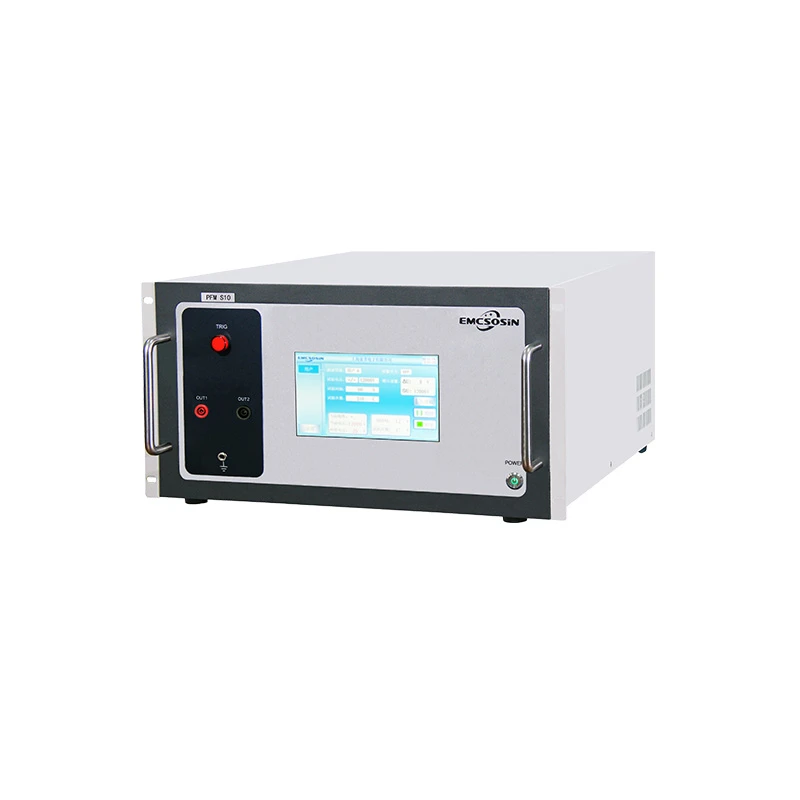

Also, don’t sleep on calibration. EFT generators need to be calibrated regularly to make sure they’re producing the correct voltage and pulse width, which is critical for accurate EMC testing. If your generator is out of calibration, you might be doing tests that aren’t actually accurate, which can lead to you missing compliance issues or wasting time on faulty test results. Calibration also helps extend lifespan, because it catches issues early—like a weak switch or a dying capacitor—before they cause more damage. Most calibration labs recommend calibrating your EFT generator once a year, or every 1,000 hours of use, whichever comes first.
Let’s get real about common misconceptions. A lot of people think “warranty equals lifespan.” Sure, a 2-year warranty is great, but if the generator is built with cheap parts, once the warranty is up, you’re on your own. We offer a 3-year warranty on all our EFT generators, including our three phase 5kV EFT/Burst Generator, but that’s because we build them to last longer than that, not because we’re trying to upsell. Another myth: more voltage means shorter lifespan. No, not if the generator is designed for that voltage. Our 6kV models are built to handle continuous 6kV bursts, so they won’t wear out faster than a 5kV unit if used correctly. The key is that the components are rated for the maximum voltage the generator produces.
So what can you do to make your EFT burst generator last as long as possible? Let’s recap the actionable stuff, no fluff:
- Buy quality, not cheap. A generator that costs a bit more upfront will save you thousands in replacements and repairs down the line.
- Use it appropriately. Don’t run it beyond its rated voltage or pulse count—if you need higher voltage, get a model that’s designed for that, not pushing a 5kV unit to 6kV.
- Do regular maintenance. Clean it every 3 months, check connections, inspect your capacitive coupling clamp for wear, and replace parts like capacitors before they fail.
- Keep it in a good environment. Cool, dry, away from direct sun and moisture.
- Calibrate it annually. This keeps it accurate and catches small issues before they turn into big problems.
If you’re in the market for an EFT burst generator, keep these things in mind. We’ve built our line to be long-lasting, reliable, and supported for years after purchase—whether you need our single phase 5kV model, a higher-power 6kV unit, or three phase for your industrial testing, we’ve got options designed to handle the most demanding test schedules.
At the end of the day, the lifespan of your EFT burst generator is mostly in your hands. A quality unit paired with good use and maintenance can go from good gear to a reliable workhorse that serves you for well over a decade. If you have questions about which model is right for your testing needs, or want more tips on extending the life of your current generator, feel free to reach out.
References
- International Electrotechnical Commission (IEC) 61000-4-4, Electromagnetic compatibility (EMC) – Testing and measurement techniques – Electrical fast transient/burst immunity test
- IEEE Standards Association. (2018). IEEE Std 454-2018, Standard for Electrical Fast-Transient Generator Systems for Use in Electromagnetic Compatibility Testing
- National Institute of Standards and Technology (NIST). (2021). Maintenance and Calibration Practices for Electronic Test Equipment


