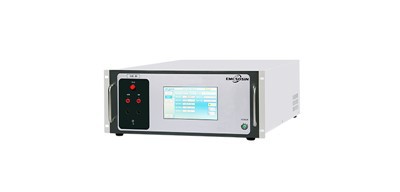

Let's talk about one of the most frequently asked questions in our line of work: What is the sampling rate of an ESD Test Bench? As a supplier of ESD Test Benches, I often encounter customers who are curious about this crucial parameter.
First off, for those who aren't super familiar with ESD testing, let me give a quick rundown. Electro - Static Discharge (ESD) is the sudden flow of electricity between two electrically charged objects caused by contact, an electrical short, or dielectric breakdown. ESD can cause serious damage to electronic devices, so it's essential to test them using an ESD Test Bench to ensure they can withstand these discharges.
The sampling rate of an ESD Test Bench refers to how often the bench takes a measurement during an ESD event. It's measured in samples per second (S/s). A higher sampling rate means more data points are captured during the ESD event, which gives a more detailed and accurate picture of what's happening.
Think of it like taking a video. If you record a video at a low frame rate, say 10 frames per second, fast - moving objects might look blurry or jumpy. But if you record at a high frame rate, like 60 or 120 frames per second, you can see every little detail of the movement clearly. In the context of ESD testing, the sampling rate is like the frame rate of the video. A high sampling rate allows us to capture the fast - rising edges and short - duration pulses that are typical of ESD events.
So, why does the sampling rate matter? Well, ESD events are extremely fast. The rise time of an ESD pulse can be as short as a few nanoseconds. If the sampling rate of the test bench is too low, it might miss important details of the pulse, like its peak amplitude or the shape of the leading edge. This can lead to inaccurate test results, which is a big no - no when you're trying to ensure the quality and reliability of your electronic devices.
For example, let's say you're testing a sensitive microchip. An ESD event can potentially cause a glitch or even permanent damage to the chip. If your test bench has a low sampling rate, it might not detect a short, high - amplitude spike in the ESD pulse that could have caused the problem. As a result, you might think the chip is ESD - resistant when it's actually not.
Now, what's a good sampling rate for an ESD Test Bench? There's no one - size - fits - all answer, as it depends on several factors. The type of ESD test you're performing is a major factor. Different standards, like IEC 61000 - 4 - 2, have different requirements for ESD testing. Generally, for most ESD tests, a sampling rate of at least 1 GHz (1 billion samples per second) is recommended. However, for more advanced testing or when dealing with very high - speed electronic devices, you might need a sampling rate of 2 GHz or even higher.
At our company, we offer a range of ESD Test Benches with different sampling rates to meet the diverse needs of our customers. Our high - end models come with sampling rates of up to 4 GHz, which allows for extremely accurate and detailed ESD testing.


In addition to the sampling rate, there are other factors to consider when choosing an ESD Test Bench. The bandwidth of the test bench is also important. Bandwidth refers to the range of frequencies that the test bench can accurately measure. A higher bandwidth means the test bench can handle higher - frequency components of the ESD pulse, which is crucial for capturing the fast - rising edges.
Another important factor is the dynamic range of the test bench. The dynamic range is the ratio between the largest and smallest signals that the test bench can measure. A larger dynamic range allows the test bench to accurately measure both small and large ESD pulses without distortion.
We also offer a variety of ESD testing equipment to complement our ESD Test Benches. For example, our 30kV ESD Gun and 20kV ESD Gun are designed to generate high - voltage ESD pulses for testing purposes. These guns are calibrated to meet international standards, ensuring reliable and accurate testing.
Our HBM MM ESD Immunity Tester ESD 8K is another great product. It's specifically designed for Human - Body Model (HBM) and Machine - Model (MM) ESD testing, which are two common types of ESD tests used in the electronics industry.
If you're in the market for ESD testing equipment, I encourage you to reach out to us. We have a team of experienced professionals who can help you choose the right ESD Test Bench and related equipment for your specific needs. Whether you're a small electronics manufacturer or a large research institution, we can provide you with high - quality, reliable ESD testing solutions.
In conclusion, the sampling rate of an ESD Test Bench is a critical parameter that can significantly impact the accuracy and reliability of your ESD testing. By choosing a test bench with an appropriate sampling rate, along with other important features like bandwidth and dynamic range, you can ensure that your electronic devices are well - protected against ESD. If you have any questions or are interested in our products, don't hesitate to contact us for a consultation and potentially start a purchase negotiation.
References
- IEC 61000 - 4 - 2 Standard for Electrostatic Discharge Immunity Test
- Various technical documents on ESD testing and measurement principles.