
As a supplier of ESD Simulator Guns, I often encounter inquiries regarding the response time of these crucial pieces of equipment. Understanding the response time of an ESD Simulator Gun is essential for ensuring accurate and reliable electrostatic discharge (ESD) testing. In this blog post, I will delve into the concept of response time, its significance, and how it impacts ESD testing.
What is Response Time in an ESD Simulator Gun?
The response time of an ESD Simulator Gun refers to the time it takes for the gun to generate and deliver a specified electrostatic discharge pulse following the activation command. It encompasses the time from when the trigger is initiated until the output pulse reaches a predefined level, typically a certain percentage of its peak amplitude. This parameter is vital for replicating real - world ESD events accurately, as it determines how closely the simulated discharge mimics the characteristics of natural electrostatic discharges.
Components Affecting Response Time
Several components within the ESD Simulator Gun contribute to its response time. The high - voltage power supply, for example, plays a crucial role. A well - designed power supply can quickly charge the capacitor to the desired voltage level, which is the first step in generating an ESD pulse. If the power supply has a slow charging rate, it will directly increase the overall response time of the gun.
The switching mechanism is another critical component. When the trigger is pulled, the switch must close rapidly to allow the stored energy in the capacitor to be discharged through the output electrode. Any delay in the switching action can cause a significant increase in the response time. High - quality switches with low inductance and capacitance are essential for minimizing this delay.
The output impedance of the gun also affects the response time. A low - impedance output allows the discharge current to flow more freely, reducing the time it takes for the pulse to reach its peak amplitude. Conversely, a high - impedance output can slow down the discharge process and increase the response time.
Significance of Response Time in ESD Testing
Accurate ESD testing relies on the ability of the ESD Simulator Gun to replicate the characteristics of real - world electrostatic discharges. The response time is a key factor in determining the fidelity of this replication.
In real - world scenarios, electrostatic discharges can occur very rapidly. For example, when a person touches an electronic device, the discharge can happen within a few nanoseconds. If the response time of the ESD Simulator Gun is too long, it may not accurately replicate the fast - rising edge of the real - world discharge. This can lead to inaccurate test results, as the device under test may respond differently to a slow - rising pulse compared to a fast - rising one.
Moreover, many electronic devices are designed to withstand specific ESD waveforms with defined rise times and amplitudes. If the response time of the ESD Simulator Gun is not within the specified range, the device may pass or fail the test incorrectly. This can have serious consequences, especially in industries where ESD protection is critical, such as aerospace, automotive, and medical device manufacturing.
Measuring the Response Time of an ESD Simulator Gun
Measuring the response time of an ESD Simulator Gun typically involves using high - speed oscilloscopes and specialized test fixtures. The process usually begins by connecting the output of the ESD Simulator Gun to a test load that mimics the impedance characteristics of the device under test.


When the gun is triggered, the oscilloscope captures the output pulse. The response time is then measured as the time interval from the trigger event to the point where the pulse reaches a specific percentage of its peak amplitude, commonly 10% or 50%. This measurement must be repeated multiple times to ensure accuracy, as there can be slight variations in the response time from one discharge to another.
Manufacturers of ESD Simulator Guns usually specify the maximum allowable response time in their product datasheets. This specification provides customers with a clear understanding of the gun's performance capabilities and helps them determine whether it is suitable for their specific testing requirements.
Our ESD Simulator Gun Products and Response Time
At our company, we understand the importance of fast and accurate response times in ESD testing. That's why we have invested heavily in research and development to optimize the design of our ESD Simulator Guns.
Our ESD Test Bench is designed to work seamlessly with our ESD Simulator Guns, providing a stable and controlled testing environment. The combination of our high - performance guns and the test bench ensures accurate and repeatable ESD testing results.
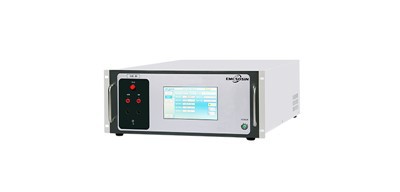
One of our flagship products, the HBM MM ESD Immunity Tester ESD 8K, offers a very short response time, allowing it to replicate fast - rising ESD pulses with high fidelity. This makes it ideal for testing sensitive electronic components that require precise ESD protection.
For more demanding applications, we also offer the 20kV ESD Gun and the 30kV ESD Gun. These high - voltage guns are designed to generate powerful ESD pulses while maintaining a fast response time. They are suitable for testing devices that are exposed to high - energy electrostatic discharges, such as automotive electronics and industrial equipment.
Conclusion
The response time of an ESD Simulator Gun is a critical parameter that directly impacts the accuracy and reliability of ESD testing. A fast response time ensures that the simulated ESD pulses closely mimic real - world discharges, allowing for more accurate evaluation of a device's ESD immunity.
As a leading supplier of ESD Simulator Guns, we are committed to providing our customers with high - quality products that offer fast response times and superior performance. If you are in the market for ESD testing equipment, we encourage you to reach out to us. Our team of experts will be happy to assist you in selecting the right ESD Simulator Gun for your specific testing needs. Contact us today to start a discussion about your procurement requirements and let us help you ensure the ESD protection of your electronic products.
References
- International Electrotechnical Commission (IEC). IEC 61000 - 4 - 2: ElectroMagnetic Compatibility (EMC) - Part 4 - 2: Testing and measurement techniques - Electrostatic discharge immunity test.
- American National Standards Institute (ANSI). ANSI/ESD STM5.1 - 2016: Standard Test Method for Human Body Model (HBM) Electrostatic Discharge Sensitivity Testing.
- ESD Association. ESD Handbook ESD TR20.20 - 2014: A guide to the selection and implementation of an electrostatic discharge control program.