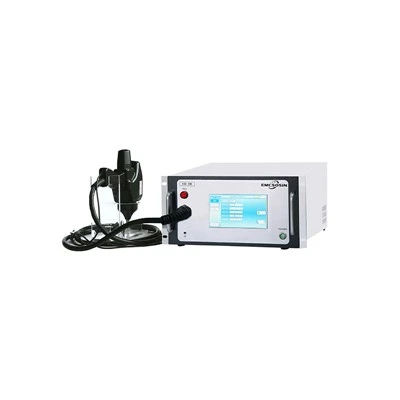

If you’re an SPD surge generator supplier like us, you already know a reliable surge generator isn’t just about cranking out pulses—it’s about hitting strict certification requirements to prove your gear works as promised. Whether you’re selling to industrial test labs, electrical component manufacturers, or compliance teams, skipping these certifications can sink your credibility (and your sales) fast. As someone who’s spent years tuning 10kV Surge Generator models and troubleshooting test hiccups, I’ve seen firsthand how even small missteps in certification can derail a product launch.
Let’s break down the most important certification hoops your surge generator needs to clear, no stuffy jargon allowed. First up, the main standards that govern surge generators for SPD testing: IEC 61000-4-5 and ANSI/UL 1449. These aren’t just random rules—they’re the global baseline for ensuring your equipment can safely reproduce the exact surge waveforms real-world SPDs will face.
IEC 61000-4-5, the international go-to, dictates two core surge waves: 8/20 μs for lightning-induced surges (the most common for SPDs) and 1.2/50 μs for direct lightning strikes. But here’s the kicker: your surge generator can’t just spit out any version of these waves. The standard requires tight tolerances on amplitude (voltage/current), waveform timing, and impedance. For example, a 10kV surge needs a peak voltage within ±5% of the target, and the front time of an 8/20 μs wave can’t drift more than 10% from 8 μs. If your Lightning Surge Simulator misses those marks, test labs will flag it—and your customers will reject it, because their SPDs won’t get accurate, repeatable tests.
Then there’s ANSI/UL 1449, the U.S.-specific standard for surge protective devices that also covers the equipment used to test them. It has extra requirements for safety, too—like insulation ratings for high-voltage parts and protection against accidental shocks. Unlike IEC, which is more focused on waveform accuracy, UL leans hard on real-world safety: if your surge generator has a flaw that could cause an arc, UL will mark it as non-compliant before it even hits a lab’s test bench.
Now, let’s talk about test equipment accessories that tie into certification. You can’t run an SPD test with just a surge generator—you need coupling networks to inject surges into the right lines, and that gear has to meet its own certifications. For example, Data Line Coupling Networks (D-LCNs) are required for testing SPDs on communication lines, and they have to match the impedance of the lines they’re testing (usually 50 Ω or 75 Ω for telecom). If your coupling network isn’t certified, your surge generator’s test results won’t be recognized by any regulatory body.
Next, performance testing requirements that go hand-in-hand with certification. No standard will just take your word that your surge generator works—you have to run a battery of internal tests to prove it, and document every single step. Let’s say you’re launching a new Lightning Surge Generator SUR 1000L: first, you’d test waveform stability over 100 consecutive pulses. If the peak voltage shifts by more than 2% during that run, that’s a fail—laboratories need consistent, repeatable data to certify SPDs, so your gear has to deliver. You also have to test for overload protection: if someone hooks up a 100 Ω load when your generator is rated for 50 Ω, it should shut down automatically instead of damaging itself. That’s a big one for customer safety, and a non-negotiable for both IEC and UL.
Don’t forget calibration. Most global standards require annual calibration of your surge generator, and the calibration lab has to be accredited to ISO 17025. That means the lab’s equipment is itself tested against national metrology standards, so your generator’s waveform measurements are traceable. If a lab checks your generator and finds its voltage is off by more than the allowed tolerance, you’ll have to re-calibrate and re-submit for certification. This isn’t a one-time task—customers will ask for proof of valid calibration with every test report they file.
Another often-overlooked area is documentation for your customers. Even if your surge generator is certified, you need to provide clear, easy-to-follow instructions on how to set it up, adjust waveforms, and perform tests that align with IEC 61000-4-5 and UL 1449. If a customer misuses your generator and produces a bad test result, that reflects poorly on your product. We include step-by-step guides with every High Voltage Surge Generator we sell, so customers can avoid mistakes and their tests will pass compliance checks.
Wait, there’s also regional variations. For example, if you’re selling to Europe, you’ll need to mark your generator with the CE logo, which confirms it meets all EU EMC and safety standards. In Australia, they have AS/NZS 61000.4.5, which is nearly identical to IEC but has a few extra local testing requirements. We adjust our certification process for every region we serve, because a CE mark won’t cut it for a lab in Sydney—they’ll need to show compliance with AS/NZS too.
Let’s be real: certifications aren’t just hoops to jump through. They’re proof that your surge generator is reliable. I’ve talked to dozens of SPD manufacturers who lost big contracts because their uncertified surge generators gave flaky test data. One customer told me they almost lost a government contract because their old generator’s waveforms were so inconsistent, their SPDs failed tests even when they worked perfectly. Switching to a certified generator (like our SUR 1000L) fixed that problem overnight.


Now, if you’re in the market for a certified surge generator, don’t just go for the cheapest option. Check for IEC 61000-4-5 and UL 1449 certification first, then ask about calibration and accessory compatibility. We’ve helped hundreds of labs and manufacturers make that choice, and we’re ready to walk you through your options—whether you need a compact 10kV unit for small labs or a high-voltage model for industrial testing. We can answer questions about waveform accuracy, accessory needs, and even how to align your test process with regional standards. So if you’re ready to source a certified SPD surge generator that won’t cause certification headaches down the line, reach out to us today to discuss your specific needs.
References
- International Electrotechnical Commission. (2018). Electromagnetic compatibility (EMC) - Part 4-5: Testing and measurement techniques - Surge immunity test (IEC 61000-4-5:2018). Geneva, Switzerland: IEC.
- Underwriters Laboratories. (2020). Standard for Surge Protective Devices (UL 1449 4th Edition). Northbrook, IL: UL Solutions.
- Standards Australia/Standards New Zealand. (2021). Electromagnetic compatibility (EMC) - Part 4-5: Testing and measurement techniques - Surge immunity test (AS/NZS 61000.4.5:2021). Sydney, Australia: SA/SNZ.
- International Organization for Standardization. (2019). General requirements for the competence of testing and calibration laboratories (ISO/IEC 17025:2017). Geneva, Switzerland: ISO.