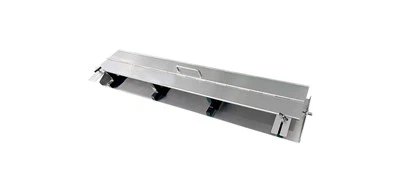

Humidity is a crucial environmental factor that can significantly influence the performance of an ESD (Electrostatic Discharge) Test Bench. As a leading supplier of ESD Test Benches, we understand the importance of comprehending these effects to ensure accurate and reliable ESD testing. In this blog, we will delve into how humidity impacts the performance of an ESD Test Bench and discuss strategies to mitigate its adverse effects.
Basic Principles of ESD Testing
Before delving into the effects of humidity, it is essential to understand the basic principles of ESD testing. ESD involves the sudden transfer of electrostatic charge between two objects at different electrical potentials. During an ESD event, a high - voltage pulse can be generated, which may cause damage to electronic components. An ESD Test Bench is designed to simulate these electrostatic discharge events under controlled conditions to evaluate the immunity of electronic devices to ESD.
The ESD Test Bench typically consists of an ESD generator, a test table, coupling planes, and other accessories. The ESD generator, such as the 30kV ESD Gun or the 20kV ESD Gun, is used to generate the electrostatic discharge pulses with a predefined voltage and waveform. The test table provides a stable platform for placing the device under test, and the coupling planes are used to simulate different coupling modes of the electrostatic discharge.
Impact of Humidity on ESD Test Bench Performance
Charging and Discharging Processes
Humidity has a direct impact on the charging and discharging processes in an ESD Test Bench. In a dry environment (low humidity), the air has a relatively low conductivity, which means that electrostatic charges can accumulate more easily on objects. When testing electronic devices in a low - humidity environment, the ESD generator may produce higher and more unpredictable electrostatic charge levels. This can lead to over - testing of the devices, as the electrostatic discharge events may be more severe than those encountered in real - world scenarios.
Conversely, in a high - humidity environment, the water vapor in the air increases the conductivity of the air. This causes electrostatic charges to dissipate more rapidly. As a result, the ESD generator may have difficulty in generating and maintaining the high - voltage charges required for accurate ESD testing. The discharge - voltage levels may be lower than expected, and the waveform of the ESD pulse may be distorted, leading to under - testing of the devices.
Surface Resistance of Test Components
Humidity also affects the surface resistance of the components on the ESD Test Bench. For example, the coupling planes and the test table made of insulating materials can absorb water molecules from the air in a high - humidity environment. This absorption of water can reduce the surface resistance of these materials. A lower surface resistance can cause the electrostatic charges to spread more quickly across the surface, which may affect the coupling of the electrostatic discharge to the device under test.
In a low - humidity environment, the surface resistance of insulating materials is high, and electrostatic charges are more likely to accumulate at local points. This can lead to a non - uniform distribution of electrostatic charges on the test bench, which may result in inaccurate testing results.
Signal Integrity
The signal integrity during an ESD test can be compromised by humidity. In a high - humidity environment, the presence of water vapor can cause attenuation and phase changes in the electrostatic discharge pulses. These changes can affect the accuracy of the voltage and current measurements during the ESD test. Moreover, the increased conductivity of the air can introduce additional noise into the test system, making it difficult to distinguish the true ESD signals from the background noise.
In a low - humidity environment, the high - voltage electrostatic discharge pulses may generate strong electromagnetic fields. These fields can cause electromagnetic interference (EMI) with the test equipment, leading to errors in the measurement of the ESD parameters.
Measuring and Controlling Humidity in ESD Testing
To ensure the accuracy and reliability of ESD testing, it is necessary to measure and control the humidity in the test environment. Most ESD testing standards recommend maintaining the relative humidity within a specific range, typically between 30% and 60%.
Humidity can be measured using a humidity sensor, which can be installed near the ESD Test Bench. These sensors can provide real - time humidity data, allowing the test operators to monitor the humidity levels during the testing process.
To control the humidity, environmental control systems such as air conditioners and humidifiers can be used. In a low - humidity environment, a humidifier can be used to increase the humidity level by adding water vapor to the air. In a high - humidity environment, an air conditioner can be used to remove the moisture from the air by cooling it and condensing the water vapor.
The Role of Our ESD Test Benches in Humidity - Affected Testing
As an ESD Test Bench supplier, we have designed our products to minimize the impact of humidity on ESD testing. Our ESD Test Benches are made of high - quality materials with stable surface resistance characteristics, which are less affected by humidity changes. The test benches are also equipped with proper grounding systems to ensure the effective dissipation of electrostatic charges, regardless of the humidity levels.
In addition, our ESD generators, such as the HBM MM ESD Immunity Tester ESD 8K, are designed to generate stable and accurate ESD pulses under various environmental conditions. They have built - in compensation mechanisms to adjust for the effects of humidity on the charging and discharging processes, ensuring that the ESD test results are reliable.
Strategies for Mitigating Humidity Effects
In addition to controlling the environmental humidity, there are several other strategies that can be employed to mitigate the effects of humidity on ESD testing.


- Pre - conditioning the Test Samples: Before conducting the ESD test, the test samples can be pre - conditioned in a controlled - humidity environment for a certain period. This can help to stabilize the moisture content of the samples and reduce the impact of humidity on the testing results.
- Regular Calibration of Test Equipment: Regular calibration of the ESD Test Bench and the associated test equipment is essential to ensure their accuracy and reliability. The calibration should be carried out under different humidity conditions to account for the effects of humidity on the equipment performance.
- Using Protective Coatings: Applying protective coatings to the test components can help to reduce the absorption of water molecules and maintain the stability of the surface resistance. These coatings can also provide additional protection against electrostatic charges and environmental factors.
Conclusion
Humidity is a significant factor that can affect the performance of an ESD Test Bench. It can influence the charging and discharging processes, the surface resistance of test components, and the signal integrity during ESD testing. As an ESD Test Bench supplier, we are committed to providing high - quality products and solutions to minimize the impact of humidity on ESD testing.
If you are looking for reliable ESD testing equipment or have any questions about ESD testing in different humidity conditions, we encourage you to contact us for further discussion and procurement negotiation. We have a team of experts who can provide you with professional advice and support to meet your specific testing needs.
References
- IEC 61000 - 4 - 2, "Electromagnetic compatibility (EMC) - Part 4 - 2: Testing and measurement techniques - Electrostatic discharge immunity test".
- D. A. Bell, "Electromagnetic Fields", Oxford University Press, 1997.
- N. Moore, "Understanding ESD: A Practical Guide", Wiley - IEEE Press, 2019.