The 2026 EMC Landscape: ESD Testing Moves Toward Greater Precision and Compliance
The electromagnetic compatibility (EMC) industry is undergoing a notable transformation in 2026, driven by evolving regulatory frameworks, the growth of high-frequency communication technologies, and the electrification of transportation. At the center of this transformation is electrostatic discharge (ESD) immunity testing-a discipline that has evolved from a routine compliance step into an important engineering challenge requiring precision, repeatability, and domain expertise.
A Key Standard Revision
A key development shaping the EMC testing landscape this year is the broad adoption of IEC 61000-4-2:2025, the third edition of the international standard for ESD immunity testing. This revision introduces substantial technical changes compared with the 2008 edition, including revised generator parameters, updated calibration procedures, revised laboratory test configurations, and new requirements for post-installation testing. The updated standard places greater emphasis on improving the consistency and comparability of test results across laboratories worldwide-a shift intended not to increase test severity, but to enhance the repeatability and interpretability of ESD immunity evaluations through refined waveform parameters and clearer test configuration control.
Among the notable additions is a new calibration requirement for ESD generators equipped with air discharge tips, along with a normative annex addressing test setups for specialized equipment categories and an informative annex for wearable devices. These changes indicate a clear industry direction: ESD testing is moving toward greater engineering rigor and cross-laboratory harmonization.
Market Momentum and Regional Expansion
The commercial stakes are considerable. According to industry research, the global EMC testing market was valued at approximately $2.64 billion in 2025 and is projected to reach $2.79 billion in 2026, growing at a compound annual growth rate of 5.6%. Higher forecasts place the 2026 market at $3.42 billion, with expectations of reaching $6.06 billion by 2034. The data center EMC testing segment alone is anticipated to expand from $1.2 billion in 2024 to $2.6 billion by 2033, reflecting the rapid growth in cloud infrastructure and high-density computing.
This growth is mirrored in physical infrastructure investment. UL Solutions recently broke ground on a new EMC and wireless testing laboratory in Neu-Isenburg, Germany, designed to accommodate large-scale industrial equipment and appliances up to 4 meters in length and 5 tons in weight, with power capabilities reaching 200 amps per phase. The facility, scheduled to be operational by mid-2027, underscores the industry's recognition that testing capacity must keep pace with the increasing complexity and scale of modern electronic systems.
The 5G and Automotive Frontier
Two application domains are placing particularly intense demands on ESD testing capabilities. In the 5G ecosystem, the proliferation of millimeter-wave frequency bands and the corresponding increase in RF switches have created new ESD design challenges. ESD-induced parasitic effects become more pronounced as operating frequencies increase-insertion loss degradation of up to 9.63 dB has been reported at 38 GHz in advanced SOI processes, compared with roughly 3.21 dB at 28 GHz. This frequency sensitivity demands a new approach to ESD-RFIC co-design that goes beyond conventional protection strategies.
Meanwhile, the automotive sector is navigating its own regulatory evolution. China's new standard GB 34660-2026, scheduled for implementation in July 2027, updates electromagnetic emission limits and expands immunity requirements to cover the 2000 MHz to 6000 MHz frequency band, reflecting the complex electromagnetic environments in which modern vehicles operate. The companion standard GB/T 46894-2025, which took effect in July 2026, specifically addresses EMC testing requirements for vehicle integrated circuits across a frequency range from 150 kHz to 6 GHz, including system-level ESD immunity testing.
The Role of Testing Equipment Manufacturers
Against this backdrop of evolving standards and expanding requirements, the quality and reliability of EMC testing equipment itself becomes important. ESD generators, in particular, must deliver stable, reproducible waveforms that comply with the latest IEC and GB/T specifications. This is where manufacturers with technical expertise and a commitment to quality control can make a difference.
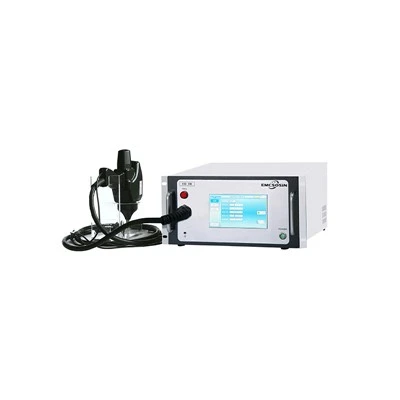
Shanghai Sosin Electronics Co., Ltd. (EMCSOSIN) is a manufacturer specializing in EMC testing equipment. With a focus on self-developed products including ESD generators, EFT/burst generators, lightning surge generators, and voltage dips simulators, the company serves customers in electronics manufacturing, electric power, new energy, communications, aerospace, automotive, and scientific research sectors. The company's ESD generator series is designed to meet the requirements of IEC 61000-4-2 and GB/T 17626.2, supporting both contact and air discharge testing modes to accommodate the needs of consumer electronics, automotive components, and industrial equipment manufacturers. With established quality control procedures, EMCSOSIN aims to provide reliable testing solutions for laboratories and manufacturers facing evolving EMC requirements.
As the EMC testing industry moves toward more rigorous standards and more demanding application environments, the relationship between standards evolution and equipment reliability will shape the competitive landscape. Manufacturers who invest in precision-engineered testing solutions-and the technical support to match-will be well positioned to help their customers navigate the complexities of the 2026 regulatory environment and beyond.