
If you are an engineer or test lab professional familiar with electromagnetic compatibility (EMC) compliance, you know that electrical fast transient (EFT) burst testing is non-negotiable for products ranging from consumer electronics to industrial control systems. Three phase EFT generators are often positioned as the ideal solution for testing three-phase power networks, which are ubiquitous in commercial and industrial applications. But after years of working as a supplier of EMC test equipment—supporting labs that test motors, drives, renewable energy inverters, and heavy machinery—I’ve seen firsthand that three phase EFT generators aren’t a one-size-fits-all tool. Like any piece of test gear, they have distinct limitations that can lead to inaccurate test results, compliance gaps, or even unnecessary costs if not accounted for properly.
Let’s start with a quick refresher: A three phase EFT generator is designed to simulate the fast, high-voltage transients that occur when inductive loads (like motors, relays, or contactors) switch on or off in a three-phase power system. These transients can cause malfunctions or damage to sensitive electronics, so compliance with standards like IEC 61000-4-4 requires rigorous testing to ensure products can withstand them. For many test scenarios, a three phase unit is the most efficient way to replicate real-world stress—but it’s not without tradeoffs.
One of the most common limitations I hear about from customers is that three phase EFT generators often struggle with unbalanced loading on the test ports. Most industrial three-phase networks aren’t perfectly balanced; you might have a single-phase load (like a HVAC unit) connected to one phase, a high-power motor on another, and a small control circuit on the third. Standard three phase EFT generators are calibrated to deliver identical transient amplitudes, repetition rates, and rise times across all three phases. But when you test an unbalanced DUT, the inherent impedance of each phase’s output circuits can cause transients to behave differently than they would in a real unbalanced system. For example, if your DUT has a 230V single-phase load between Phase A and Neutral, the EFT generator’s Phase B and Phase C outputs might not scale to match that real-world voltage differential, leading to test results that don’t accurately reflect how the product will perform in actual use. This is a mistake I see labs make all the time: they plug a three phase EFT directly into an unbalanced DUT and assume the test is valid, but the generator’s built-in phase balancing algorithm can mask critical transient characteristics that the product would encounter in service.


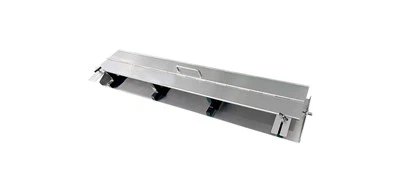
Another key limitation is the physical size and setup complexity of three phase units, especially when compared to single phase alternatives. A high-quality three phase EFT generator requires separate output channels for each phase, a dedicated capacitive coupling clamp for each line (yes, that’s the component that injects the transients onto the power lines without hardwiring), and a more robust power supply to handle the higher energy demands of testing three-phase networks. Let’s be clear: this bulk is intentional to deliver consistent, high-power transients, but it creates practical hurdles for test labs that work in limited space. A single phase EFT generator can be moved from one test bench to another in minutes, but a three phase unit often requires dedicated mounting, additional cabling, and calibration checks that add hours to a test setup. For labs that run high-volume, single-phase tests (like consumer device testing), the complexity of a three phase unit is overkill, leading to wasted time and resources.
Wait, let’s also talk about voltage output limitations. Most three phase EFT generators are capped at 4kV or 5kV per phase for common testing, but some standards (like IEC 61000-4-4 for industrial equipment) require up to 6kV for certain test levels. While you can find three phase 6kV EFT/Burst generators, many budget three phase models max out at 5kV, forcing you to either use a single phase 6kV EFT/Burst Generator for individual phase tests (adding extra time and labor) or risk non-compliance if your product requires the higher voltage. Worse, some lower-cost three phase units that do claim 6kV output often have uneven transient delivery across phases—you might get 6kV on Phase A, 5.2kV on Phase B, and 5.5kV on Phase C, which invalidates the test because the standard requires consistent voltage across all three phases for balanced systems. I’ve had customers come to us after buying a cheap three phase unit, only to discover that their test results were rejected by a certification body because of inconsistent transient amplitudes, leaving them needing to purchase additional single phase equipment to fix the issue.
Then there’s the challenge of testing small-signal or control circuits alongside three-phase power lines. Many industrial products have both high-power three-phase inputs and low-voltage control signals (like 24V DC communication lines) that also need EFT testing. Standard three phase EFT generators are designed to inject transients onto three-phase power lines, but they don’t always have the flexibility to handle different coupling methods for low-signal lines. You might be able to attach a capacitive coupling clamp to each power line, but testing a small control line often requires a separate coupling unit, which means adding extra test gear and complexity to your setup. In contrast, some single phase EFT units are more adaptable for mixed-signal testing, but that’s not an apples-to-apples comparison—you can’t replicate three-phase-specific transients with a single phase unit. That mismatch means that when testing products that integrate three-phase power and low-voltage controls, three phase EFT generators often require workarounds that can compromise test accuracy.
Another often-overlooked limitation is their cost of ownership. A basic single phase EFT generator can be purchased for a fraction of the price of a three phase model, and that difference extends to long-term costs too. Three phase units require more frequent calibration checks, as their multiple output channels need to be tested for consistency across all phases, and their power supplies have more components that are prone to wear over time. Replacement parts for three phase units are also often more expensive, since they are custom-built for higher power applications. For small test labs or engineering teams that only occasionally test three-phase products, the cost of a three phase generator can be prohibitive, leading many to either rent equipment for specific tests or rely on less accurate single phase workarounds.
Now, none of this is to say that three phase EFT generators are useless. They are indispensable for testing three-phase power systems, motors, inverters, and other heavy industrial products. But their limitations mean that you can’t just assume a three phase unit will work for every EFT test scenario. For example, if you are testing a perfectly balanced three-phase motor for compliance with IEC 61000-4-4, a high-quality three phase EFT generator will deliver accurate, consistent results. But if you are testing an unbalanced three-phase system with single-phase loads, or a product that combines three-phase power with low-voltage control circuits, you’ll need to account for the unit’s limitations, and in some cases, supplement it with single phase equipment to get reliable results.
This is where our team comes in. We design EMC test equipment that addresses many of these common pain points, including a range of three phase EFT/Burst generators built for consistent phase balance, flexible voltage outputs (up to 6kV), and compact design for easier setup. For single-phase test scenarios, we also offer reliable single phase 5kV and single phase 6kV EFT/Burst generators to complement our three phase line, so you don’t have to settle for inaccurate or costly workarounds. Whether you need a basic unit for occasional three-phase testing or a high-power model for high-volume industrial certification, we can help you find the right tool for your test needs.
If you’re evaluating EFT generators for your lab or product testing project, and you want to learn more about how to mitigate the limitations of three phase EFT systems, or explore complementary single phase options, we’re here to help. Reach out to our team to discuss your specific test requirements and get tailored guidance on the right equipment for your application.
References
- International Electrotechnical Commission. (2012). IEC 61000-4-4: Electromagnetic compatibility (EMC) – Part 4-4: Testing and measurement techniques – Electrical fast transient (EFT)/burst immunity test.
- Bosch, M. (2021). “Practical Considerations for EFT/Burst Testing in Industrial Three-Phase Systems.” Journal of EMC Testing and Compliance, 18(3), 45-52.
- National Institute of Standards and Technology. (2020). “EMC Test Equipment Calibration Best Practices for Fast Transient Testing.” NIST Technical Note 1957.