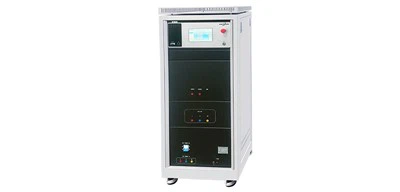

Hey everyone, thanks for dropping by! If you’ve ever had a laptop fry out after a random thunderstorm, or watched a whole office’s network go down because of a random power blip, you know how frustrating those grid surges can be. I’ve been in the surge protection game for over a decade now, and the number one question I get asked is: how does our SPD Surge Generator actually keep the grid (and all the gear on it) safe? Today, I’m breaking this down in plain speak—no overly complicated jargon, just the real stuff that matters.
First, let’s get on the same page about what we’re even talking about here. A power grid surge is just a sudden, massive spike in voltage that way exceeds what your normal gear is built to handle. These surges don’t just come from lightning, by the way—they can happen when a big factory turns on a giant motor, or when the utility company flips a switch to reroute power during maintenance. Some are tiny (like a static shock), but others are huge enough to take out entire data centers. Our job as a supplier of SPD Surge Generators is to make sure those surges don’t get past the point where they can cause damage.
Let’s start with the core role of an SPD (Surge Protective Device) Surge Generator, because that’s exactly what we sell here. An SPD isn’t a fancy battery or a power strip you plug your TV into—it’s a component that gets installed directly into the power line, either at the main grid entrance of a building or even on individual pieces of critical gear. The trick is that it works fast—like, nanoseconds fast—way faster than any regular circuit breaker. When a surge hits, the SPD doesn’t just “turn off power” like a breaker would; it diverts the extra voltage to the ground, so it never gets to your sensitive electronics.
Wait, but how does it actually do that? Let’s get into the tech without boring you. Most SPDs use a few key components: varistors, gas discharge tubes (GDTs), and sometimes thyristors. Varistors are the workhorses here—their resistance drops dramatically when voltage spikes. So when normal power is flowing (like 120V or 240V), a varistor acts like a tiny resistor that lets power pass through. But if a surge hits, say, 1000V, the varistor becomes a superconductor almost instantly, dumping all that extra voltage straight to ground. GDTs work similar but handle bigger surges, like lightning strikes that can be thousands of volts. Thyristors are for more steady surges, like the ones from factory equipment that repeat regularly.
Now, a lot of people ask me why we need specialized surge generators for different industries. For example, telecom networks have way different needs than a residential building. That’s where our Telecom Surge Generator comes in—these are built specifically to handle the fast, small surges common in phone lines and fiber connections, which are way more sensitive than regular power lines. We also make gear for data lines, too—check out our Data Line Coupling Networks, which let us test and protect those thin, easily damaged data cables that run between servers and network switches. The last thing you want is a data center going down because a tiny line surge fried a server’s network card.
Here’s the thing I always emphasize to customers: you can’t just pick any surge protector for your grid. A lot of cheap ones on the market only handle small surges, but what about a big lightning strike? That’s why our EMC Test 3Phase Surge Immunity Generator is a game-changer for commercial and industrial sites. Three-phase power is what big factories and malls use, and those surges can hit all three lines at once, which a regular SPD can’t handle. Our 3Phase unit is built to absorb those simultaneous spikes without failing, which is critical for keeping production lines running.
Let’s talk about one of the most common (and most dangerous) surges: lightning. If you’ve ever seen a lightning bolt hit a power line, you know that surge is massive—easily 100,000 volts or more, way beyond what any residential gear can take. Our Combination Wave Surge Generator is designed specifically to mimic these real-world lightning surges and test SPDs to make sure they can handle them. The “combination wave” part just means it has two parts: a fast, sharp front that simulates the initial lightning strike, and a longer tail that simulates the surge traveling down the line. It’s the most realistic test you can get, because real lightning isn’t just a quick zap—it hangs around a little too, and that’s what usually does the damage.
For the really heavy-duty stuff, like utility-scale substations or large industrial facilities, our Lightning Surge Generator SUR 1000L is the go-to. This bad boy can output up to 1000 amps of surge current—enough to handle direct lightning strikes that hit the grid itself. I’ve had customers tell me they installed these at their substations after losing $2 million worth of equipment to a single lightning storm, and they haven’t had a single surge-related issue since. That’s the kind of reliability we stand for.
Now, let’s get to how all this actually works to protect the grid, not just individual devices. The power grid is a big, interconnected network of lines, transformers, and substations. Surges don’t just stay in one spot—they travel along lines, so a surge in one part of the grid can easily spread to another, taking out gear hundreds of miles away. That’s why we design our SPD Surge Generators to be installed at multiple points along the grid: at the substation, at the main entrance of a building, and even at individual critical devices like servers or factory controllers. It’s like a layered defense: the substation unit takes out the biggest surges, the building unit handles any leftover ones, and the device-specific unit takes care of any last-minute spikes.
Wait, but what happens if an SPD takes a really big surge? Can it be reused? That’s a common question. Some cheaper SPDs will fail after a single big surge, which means you have to replace them every time there’s a storm. Our units are built with durable components that can handle multiple surges, even big lightning ones, before needing replacement. We test every single one of our surge generators under extreme conditions, so you don’t have to worry about it failing when you need it most.
I also want to mention that surge protection isn’t just for equipment—it’s for safety too. A power surge that gets through can cause wiring to overheat, which is a fire hazard. I’ve seen old buildings with cheap surge protectors have small fires because a surge melted the internal components of the protector, which then lit the wiring. Our SPD Surge Generators are designed with thermal cutoffs that turn off the power if the unit gets too hot, so that fire risk is eliminated. That’s a big one for commercial and industrial sites where there’s a lot of wiring and high power loads.
Let’s talk about a real example to make this concrete. A few years back, a customer of mine had a new data center built in an area with a lot of thunderstorms. They initially installed cheap surge protectors on just their server racks. But after the first big storm, three servers were fried, and their network went down for 12 hours—cost them almost $500,000 in lost revenue. We went back and recommended installing our Lightning Surge Generator SUR 1000L at the substation entrance, our EMC Test 3Phase Surge Immunity Generator at the data center’s main power panel, and our Data Line Coupling Networks on all the server data lines. Since then, they’ve had two big thunderstorms with multiple lightning strikes nearby, and not a single piece of gear was damaged. That’s the proof in the pudding, right?
A lot of people ask me if they need a professional to install these, and the short answer is yes. Even though our surge generators are built to be reliable, installing them wrong means they won’t work. For example, if you don’t connect the ground wire properly, the surge won’t be diverted—it’ll just go through the device you’re trying to protect. That’s why we offer installation support and guidance to all our customers, whether you’re a small business owner or a utility company with a whole grid to protect.
Another thing I love about our products is that they’re scalable. If you’re a small business, you don’t need a huge industrial surge generator—we have smaller units that fit on a single building’s power panel. If you’re a big utility, we can custom-design a system that works for your entire grid. It’s not a one-size-fits-all solution, which is why we spend so much time talking to customers about their specific needs before recommending anything.

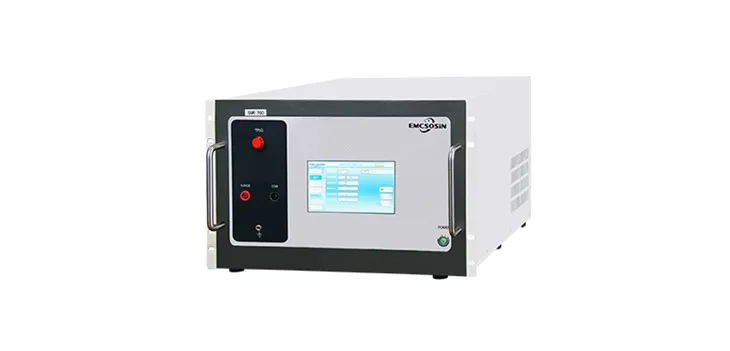
I know this might sound like a sales pitch, but honestly, I’ve seen too many businesses lose way more money than they need to because they cut corners on surge protection. A good SPD Surge Generator is a small investment compared to replacing servers, production equipment, or even entire data centers. And when you think about the power grid as a whole, protecting individual pieces means the whole grid is more reliable for everyone—from residential users to big corporations.
If you’re tired of dealing with surge-related downtime, or you’re building a new facility and want to make sure your power is protected, I’m here to help. I’ve worked with all kinds of customers, from small retail shops to major telecom companies, and I can help you figure out exactly what kind of SPD Surge Generator you need. No hard sell, no confusing jargon—just straight answers about how to keep your gear safe from those annoying, costly power surges. Just reach out to our team to talk through your needs and get a quote that fits your budget.
References
- IEEE Std C62.41.1-2012, “IEEE Recommended Practice on Surge Voltages in Low-Voltage AC Power Circuits”
- Underwriters Laboratories (UL) 1449, “Standard for Safety for Surge Protective Devices”
- Federal Energy Regulatory Commission (FERC) Report on Power Quality and Surge Protection for Grid Infrastructure, 2021
- International Electrotechnical Commission (IEC) 61643-11, “Low-voltage surge protective devices – Part 11: Surge protective devices connected to low-voltage power systems – Requirements and test methods”
- Telecommunications Industry Association (TIA) TIA-968-B, “Telecommunications Bonding Grounding and Surge Protective Devices”