
If you’ve ever worked in electronics design, quality control, or EMC (Electromagnetic Compatibility) testing, you’ve likely encountered the term “surge testing.” The goal of surge testing is to simulate the brief, high-voltage electrical spikes that can reach a product from external sources—like lightning strikes, utility grid switching, or even near-field electromagnetic pulses—to ensure components don’t fail unexpectedly. For many engineers, a common question arises: can a 1kV surge generator be used for testing electronic components? As a supplier of 1kV surge generators (and a range of related EMC testing equipment), I’ve fielded this question dozens of times over the years, and the answer isn’t a simple “yes” or “no.” It depends on your test requirements, the components you’re evaluating, and the standards you’re working to meet.


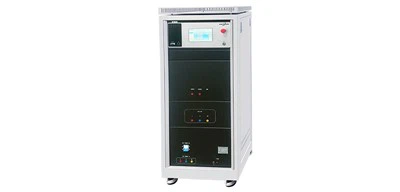
First, let’s ground this in what a 1kV surge generator actually does. A surge generator produces a controlled, transient voltage pulse—most commonly a combination wave (1.2/50µs open-circuit voltage, 8/20µs short-circuit current) —that mimics the waveform of real-world surges. 1kV refers to the open-circuit peak voltage of the generator, meaning it can deliver up to 1,000 volts of controlled, transient energy to a DUT (Device Under Test). This makes it a compact, cost-effective tool for low-to-medium voltage testing, which contrasts with higher-output units like our 10kV Surge Generator, which is built for more demanding, high-voltage applications.
To understand when a 1kV generator is appropriate, we need to break down the types of electronic components that see low-voltage exposure. Many consumer electronics components—like the USB ports in smartphones, the small signal transistors in audio devices, or the input circuits of low-power sensors—are designed to operate at voltages far below 1kV. For these parts, the primary surge risk isn’t a full lightning strike, but smaller, more frequent transients: things like plugging a device into a wall outlet where a nearby appliance just turned on, or a small electrostatic discharge (ESD) event that couples into a nearby cable. In these cases, a 1kV surge can effectively test whether a component’s ESD protection, input clamping circuit, or internal insulation can handle moderate transient stresses without degradation.
Let’s take a concrete example: a USB Type-A port on a wireless speaker. According to IEC 61000-4-5, the international standard for surge immunity testing, portable consumer electronics often require surge levels of 0.5kV to 1kV on their signal and power ports. If your component is a USB 2.0 transceiver chip that’s rated for 5V operation, a 1kV surge is 200 times its nominal voltage—enough to stress the chip’s internal ESD diodes and verify that they activate correctly to divert the surge away from sensitive circuits. A generator like our combination wave surge generator, which can be calibrated to output exactly 1kV (and lower, if needed), is ideal for this specific test. In fact, many of our clients in consumer electronics design labs use 1kV surge generators as a first-line test for new component prototypes, because it catches defects early before they move to higher-cost full product testing.
That said, there are clear limits to what a 1kV surge generator can do, and misusing it can lead to two problems: either you’re not testing hard enough, or you’re wasting time and risking damage to components that would fail at higher surge levels anyway. One common mistake engineers make is assuming a 1kV unit works for all surge-related tests, including those for high-voltage components. For example, power semiconductors used in solar inverters or EV chargers are often exposed to surges up to 4kV or more, so a 1kV generator would never deliver enough energy to test their surge tolerance. Similarly, telecom equipment (another high-surge environment, per IEC 61000-4-5) may require surge levels up to 2kV on telephone line ports, and our telecom surge generator line includes units calibrated to exactly those levels—far beyond what a 1kV model can provide.
Another critical consideration is the type of surge you’re simulating. A 1kV surge generator outputs a combination wave, which is the standard for most low-to-medium voltage EMC tests. But if you need to simulate the exact waveform of a direct lightning strike to a power line, a combination wave won’t be enough—you’d need a lightning surge simulator, which produces a different waveform (10/700µs open-circuit voltage) to match full lightning events. A 1kV unit simply can’t reach the voltage or waveform fidelity needed for that level of testing. It’s also important to note that while a 1kV surge can test the robustness of small-signal components, it may not be sufficient for long-duration surge exposure. Some industrial standards call for multiple consecutive surges over a longer period, which requires a generator with not just the right voltage, but also the ability to cycle quickly—something our EMC test 3-phase surge immunity generators are engineered for, with fast pulse repetition rates for continuous testing.
So, when is a 1kV surge generator the right choice? Let’s outline a few key scenarios:
- Testing low-voltage signal and power ports on consumer electronics (USB, HDMI, audio jacks, etc.) as required by IEC 61000-4-5 Level 1 or 2.
- Qualifying prototype components before moving to higher, more costly surge testing.
- Routine quality control testing of off-the-shelf parts to ensure they meet internal design specifications for surge tolerance.
- Educational or small lab settings where budget and space are limited, and high-voltage generators (like our 10kV unit) are unnecessary.
What about the risks of using a 1kV generator in the wrong scenario? If you’re testing a component rated for 1.5kV surge tolerance, a 1kV pulse won’t push it hard enough to reveal weaknesses—you’ll miss critical defects that would show up in a 1.5kV or 2kV test. Conversely, if you try to use a 1kV generator on a component that’s rated for 0.5kV, you could accidentally apply a surge that exceeds its tolerance, causing permanent damage to a part that would otherwise pass a lower, appropriate test level. That’s why calibration and alignment with test standards are non-negotiable: every surge generator (including our 1kV models) should be tested against IEC 61000-4-5 to ensure its output waveform and voltage accuracy are within spec, so you can trust the results.
Over the years, I’ve seen engineers make the mistake of trying to “stretch” a 1kV generator to do work it wasn’t designed for. One client in the automotive accessory space once tried to use a 1kV surge generator to test a 12V input module for a car’s infotainment system. The module’s standard requires 2kV surge testing to simulate car battery switching, so the 1kV pulse told them the module was working, but a higher-level test revealed a fault in the internal fuse that would have failed the module in real-world use. That mistake cost them a production batch rework, a reminder that matching your generator’s output to your component’s expected surge exposure is key.
Another point to consider: component datasheets. Most semiconductor manufacturers will specify the maximum surge voltage their parts can withstand without damage—for small-signal components, this is often between 0.5kV and 1.5kV. If your component’s datasheet specifies a max surge of 1.2kV, a 1kV surge test is a perfect complement; it lets you validate that the part operates within its margin, without unnecessary overtesting. For reference, our 1kV surge generators offer adjustable output levels (from 0.1kV to 1kV) to tailor the test exactly to your component’s specs, which is a feature many small lab teams appreciate for its flexibility.
Now, let’s wrap this back to the original question: can a 1kV surge generator be used for testing electronic components? The answer is a qualified yes—for a specific, well-defined set of component types and test standards. It’s not a one-size-fits-all tool, but it’s an indispensable one for labs and teams working on low-to-medium voltage electronics, where high-voltage surge generators would be overkill. If you’re unsure whether a 1kV generator is right for your test needs, or you’re looking to expand your EMC testing equipment to cover a wider range of components, we’re here to help. Our team can walk you through your test requirements, compare our range of surge generators (from 1kV units to high-output models like our 10kV Surge Generator), and help you find the right tool for the job. To discuss your testing needs and learn how our surge generators can support your component testing, get in touch with our sales team.
References
- International Electrotechnical Commission. (2018). IEC 61000-4-5: Electromagnetic compatibility (EMC) – Part 4-5: Testing and measurement techniques – Surge immunity test.
- Electronic Industries Alliance. (2020). ESD and Surge Testing for Consumer Electronics Components.
- Texas Instruments. (2021). Application Note: Surge Immunity Testing for Small-Signal Semiconductors.
- National Electrical Manufacturers Association. (2019). Guidelines for Surge Testing of Low-Voltage Industrial Components.